Day 1
France! Western Europe! Well-developed infrastructure! This should be a pleasant change of pace from jungles and deserts. I can travel with ease and comfort.
Well, that was what I thought right up to the moment when I got lost searching for the hotel in the dead of night and all the streetlights suddenly went off. There’s only so much habitual misfortune that infrastructure can compensate for.
Day 2
In the morning light, I can finally see the city that I’ve landed in. Toulouse seems pleasant, albeit from what I can see through the windows of the bus to the railway station. It’s one of those railway stations that looks like a palace, which is a nice addition to my day. I’ll explore the city properly later – for now, I’m headed south, to the Pyrenees.
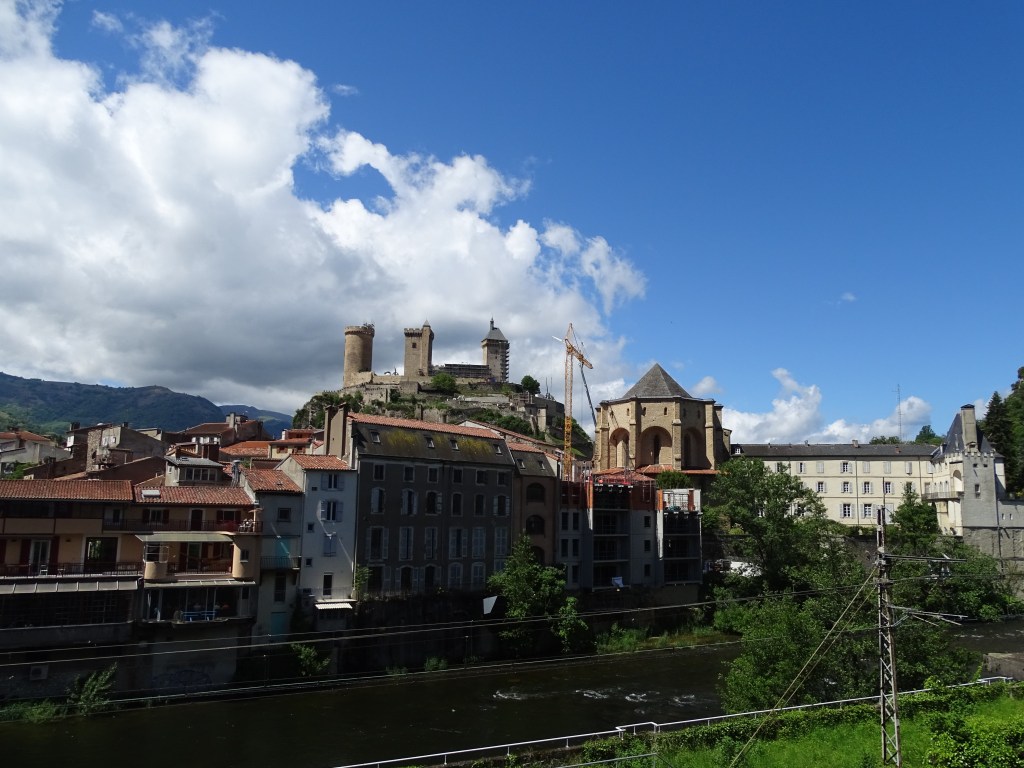
The first thing that strikes me as I leave the much smaller train station is a burst of self-esteem. I look across the river at the mountain town of Foix, with its tile-roofed terraced houses, medieval abbey, and castle perched on a towering cliff, and it occurs to me that sometimes, I’m actually quite good at choosing places to go to. There is a large crane and a lot of construction work marring the view, though, so although I’m good at choosing where to go, I might not be that great at choosing when.
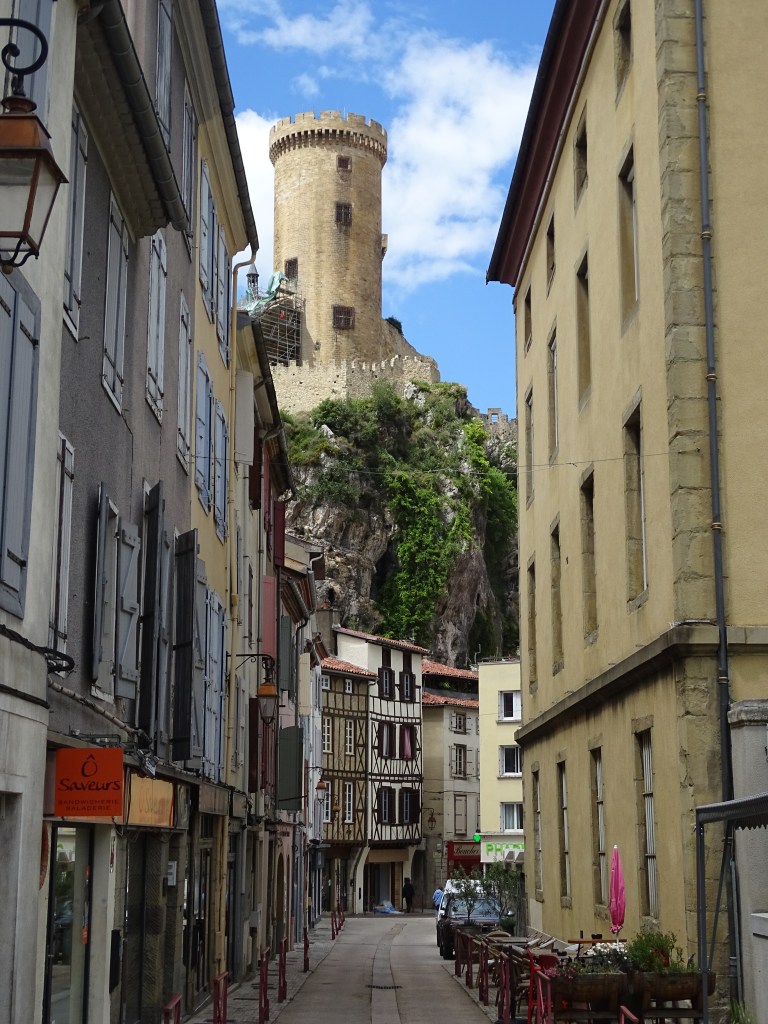
Foix is made up of narrow streets, stone buildings that look frozen in time, and gnarled wooden buildings that look like a gust of wind could bring them down. The whole thing fits so neatly into a quaint, stereotypical American image of continental Europe, but the political graffiti scrawled on the ancient walls show that Foix is still subject to the pressures of the real world. No stereotypes here.
Wait, no, scratch that, a man wearing a beret has just walked past me carrying a paper bag full of baguettes.
I’m having lunch on a restaurant’s riverside terrace in a pretty medieval town in Southern France. It’s such a typical, middle-class, middle-aged holiday thing. I should be clinking a wine glass with my wife. But I don’t drink, and I am, as ever, unmarried and alone, so instead I try to work out how exactly one relaxes. It seems alarmingly similar to being alone with my thoughts. Better distract myself with chips and an enormous jar of mustard.
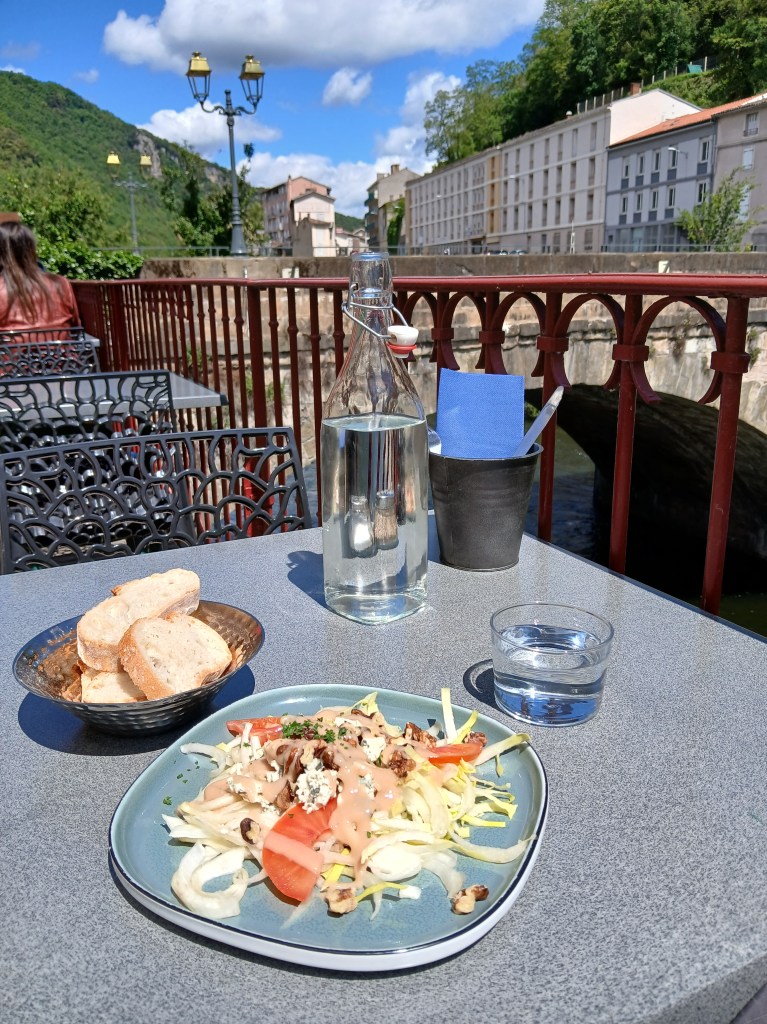

I had chips with my last three meals, so I had been hoping to have a healthier dinner, but this salade du sud-ouest contains bacon, fried potatoes, oil-saturated croutons, and the fattiest slices of duck possible. The restaurant is in one of the ancient-looking timber-framed buildings, so it does seem like an appropriate place to eat like a medieval duke.
Day 3

So far, his has been a little bit too much like a normal, relaxing holiday, suitable for the retired. I’m going south, deeper into the mountains. I hear there are bears there. This should have a little more of an edge to it.
I get off the train in the village of Tarascon-sur-Ariège, which, even surrounded with mountainous forest, is still slightly depressing, with many of the houses and businesses surrounded by high breeze-block walls. My maps app then tries to send me onto a pavement-less busy highway. Choosing to believe that I know better than a machine when it comes to not getting run over, I head away from the road and through another village, this time with much nicer houses, onto the slopes of a wooded ridge. Sure enough, I find a trail through the forest. And so, triumph of the forces of technology. Take that, Silicon Valley!

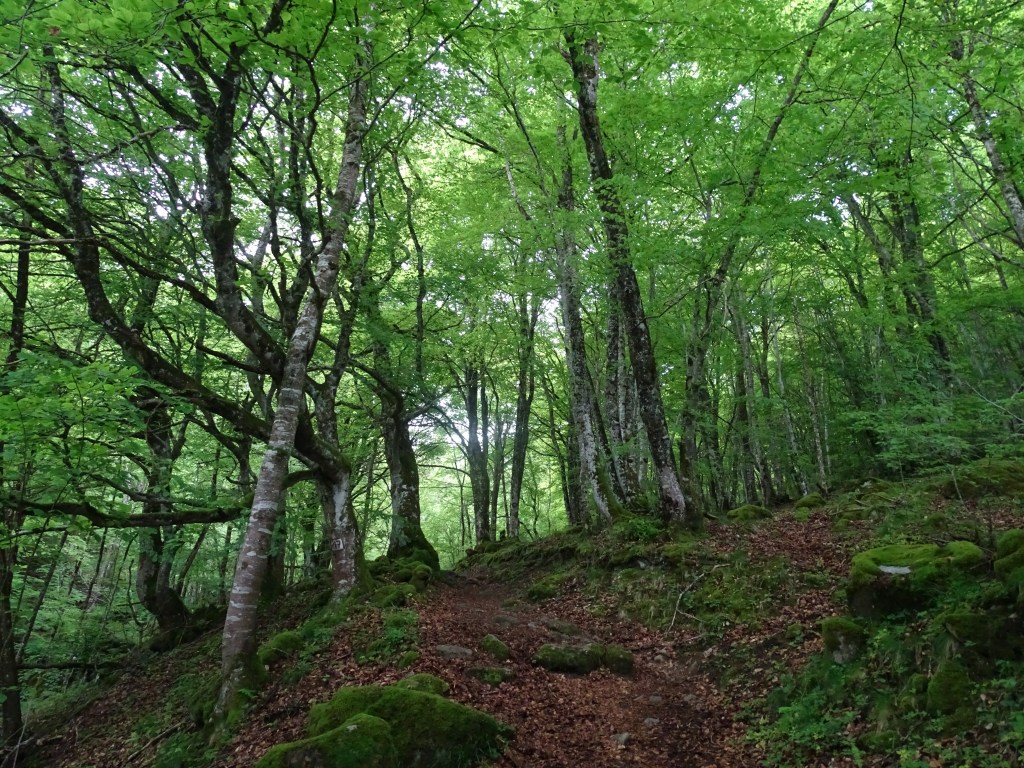
This is pleasant enough, with nice views and the tangled old-growth forests that are so rare in the UK, but, passing through the fringes of villages, it’s still just countryside rather than wilderness. What could possibly be here that would be of interest to me?
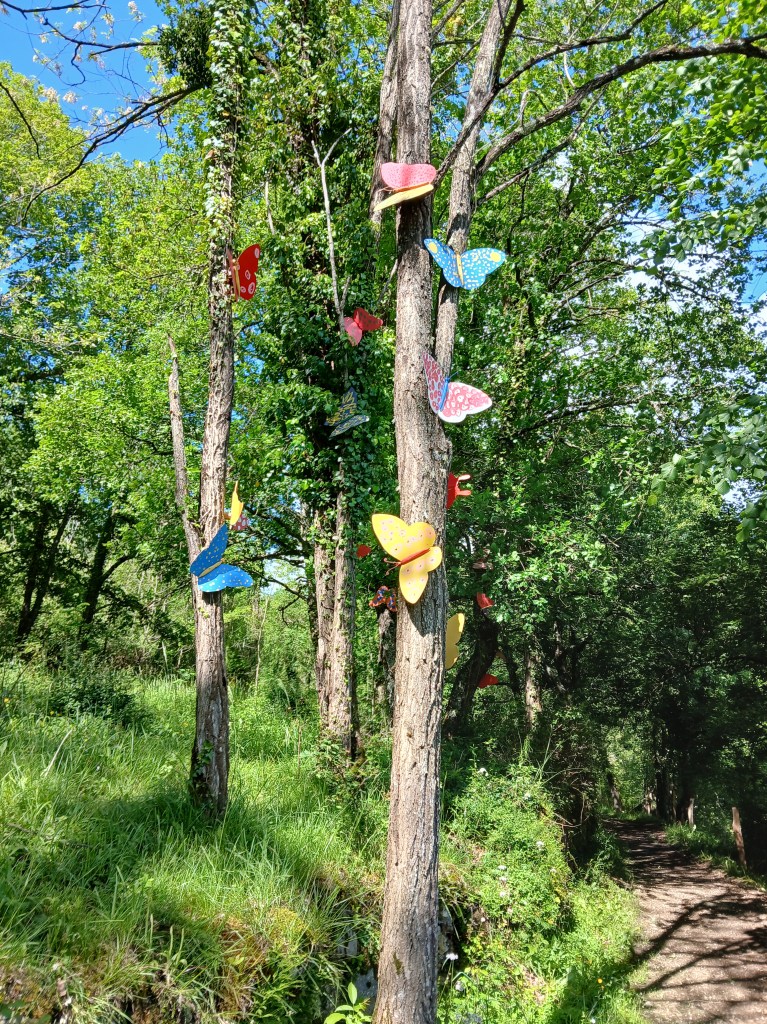
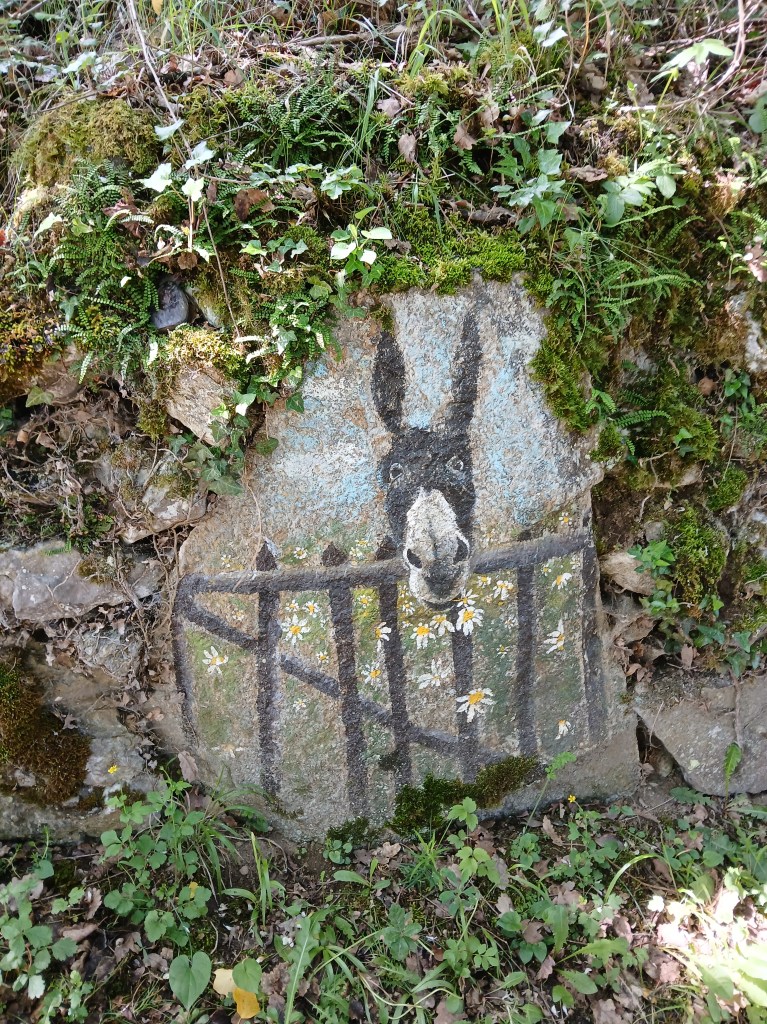
The trail suddenly answers me, as art starts appearing on it. Charmingly quirky sculptures and rustic scenes painted on the stone walls line the path to create an impromptu outdoor gallery. It looks like there are sometimes upsides to hiking so close to civilization.

I’ve left the valley villages behind, and I’m now following a winding road that climbs higher into the mountains. I’m starting to see more cattle, their bells making a surprisingly loud din, than houses. The sky is getting greyer, and I can taste the snow in the air as I see the patches of white on the distant peaks.
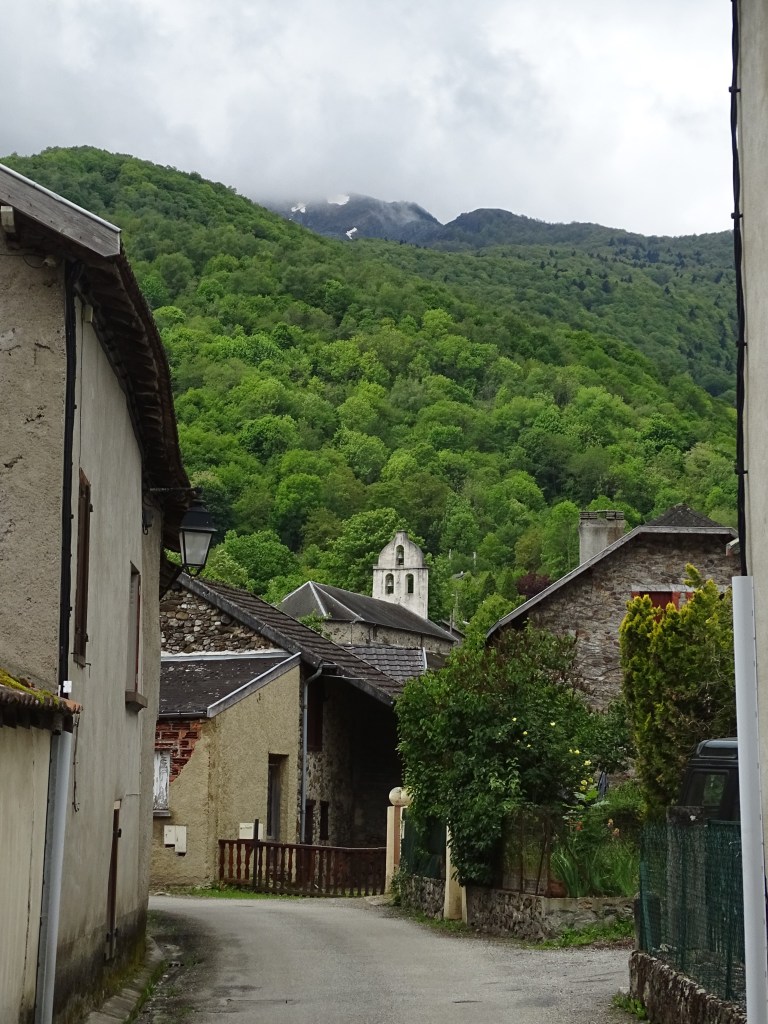
One last village, Gourbit, which looks like it has changed little in the last century, before I reach the high mountains. Between the small fields and the forest, I’m surprised to see, in emphatically secular France, a large crucifix on a slope overlooking the village. It looks a little ominous, framed against the greying sky, especially given that it effectively marks the boundary between the extremity of civilization and what lies beyond. As the fields give way to trees, I finally leave the last vestiges of human presence, apart from the stone path that leads into the deep forest.
Now I’m in the true wilderness, in the realm of bears and snowbound mountain peaks. Then I check my watch.
I’ve run out of time, I have to turn back to catch the train.
Day 4
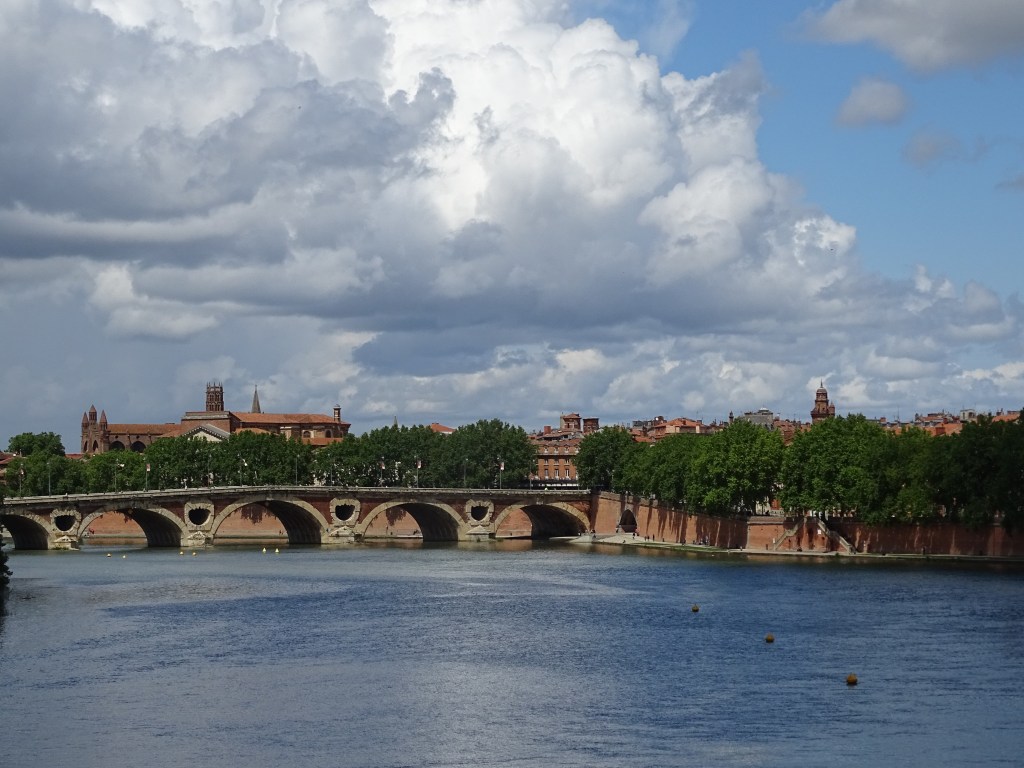
Out of the mountains, I now have the chance to explore Toulouse properly. It’s an odd kind of dissonance to me that a city made of brick manages to be so pretty. In my mind, bricks are for post-industrial English places, which can be quite chic in the right context, but are usually dull and crumbling a little. Toulouse’s bricks, on the other hand, vary between subtle shades of red, orange, and pink, which has given it the nickname of La Ville Rose – the Pink City. Once a powerful regional capital in the Middle Ages, it’s now home to a significant aeronautical industry, which is how it manages to combine thriving, modern high streets with grand old buildings shaped out of the distinctive bricks. Even the people here are stylishly dressed, which would make me feel self-conscious if I hadn’t made peace with my complete lack of dress sense a long time ago.
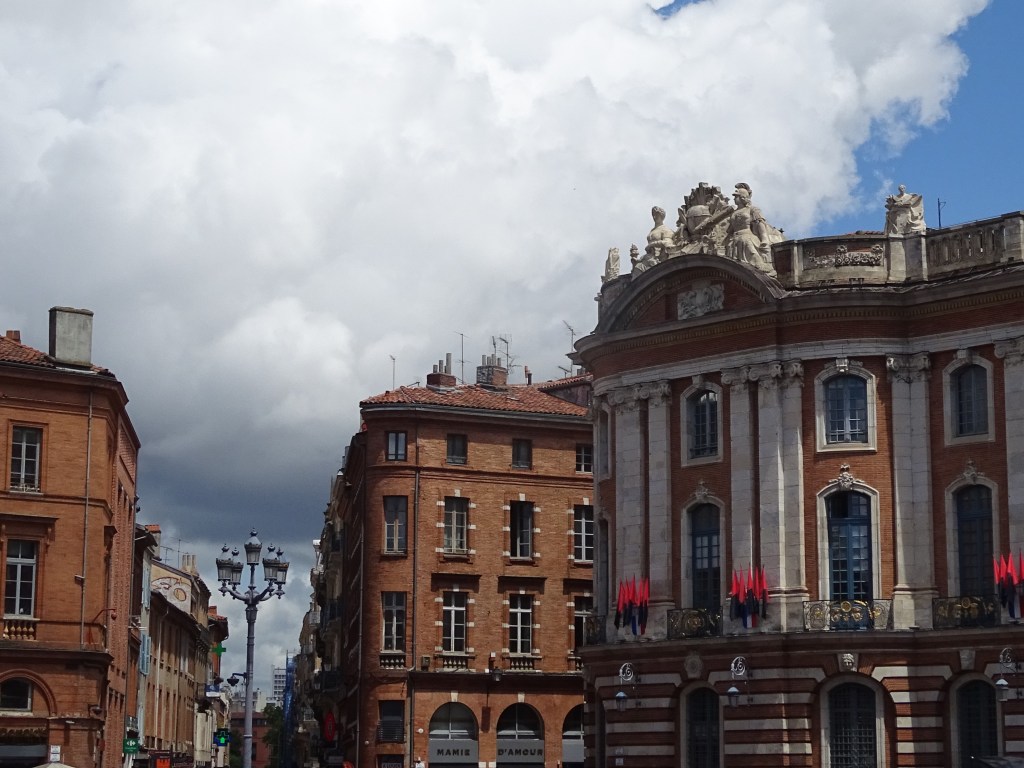
There’s no time to visit a museum or a gallery – it’s too expensive to spend a full day here – so I just wander around this blushing city. From the crimson city square of Place du Capitole, over the amber bridges on the broad river, to a verdant botanical garden of multi-hued flowers. The streets vary from narrow and probably medieval, like those of Foix, to broad, neat, and lined with tram-tracks and trees.

I normally wouldn’t trust a restaurant that uses Comic Sans for its sign, but to be fair, this duck and the inevitable chips are good. The restaurant seems to be full of foreigners, either tourists or workers in the aeronautical industry. Either way, it includes an Italian man on the table next to me, who is demanding, in English, to know if they have veal, baffling the young waitress. I try to help with my beginner-level French, explaining to the waitress that he means “young beef”, but it just seems to confuse her further. Actually, I might have said “yellow beef”. That probably didn’t help. Either way, once it becomes it clear that they don’t have any, the Italian storms out, followed by his exasperated friend.
Despite the duck and inter-European drama, Place du Capitole in the evening makes me regret not waiting longer and having dinner at one of the open-air restaurants here. There is simply nothing quite like a warm evening in the square of an elegant European city, the buildings bathed in lights that turn the throngs of people into chattering silhouettes. As I can’t have an alfresco meal in this lively twilight, I just dawdle, trying to hum to myself through a half-blocked nose.
Day 5
As ever in France, the journey home is organisationally straightforward, and the only problems come from my inherent ability to attract them. I almost lost my phone after it turned out to be perfectly camouflaged against the toilet-roll holder that I had left it on.
Well, I’m sure that once I’m back in the UK the trains will be fully functioning.
 Wandering/Wondering