Day 1
The hotel is small and basic. There are few amenities. The lock on the door keeps getting jammed. Showers are shared, and are some distance from my room. The local neighbourhood does not seem friendly. Yet, I could not be more glad to be here. My entire body feels weird from going without proper sleep for forty-two hours, my feet have developed some kind of rash from keeping my boots on the whole time, and I can practically feel my stink. This cheap little hotel near Bogotá’s airport, with its bed and shower, will be the most luxurious, decadent spa that my exhausted brain can currently imagine.
Day 2
After undergoing the rigours of travel for what felt like an eternity, I am going straight back to the airport. Shouldn’t be so bad this time, though. For one, the flight is much shorter, and for another, I’ve received an unexplained upgrade to “Economy Premium”, which gives me leg space like I have never dreamed of. The views are impressive too. I can see the entirety of San Andrés, an emerald spot of land in the azure Caribbean, as the plane comes in to land.
Straight out of the airport, San Andrés promises to be everything that I could hope a Caribbean island to be. Squabbling flocks of parrots flutter from palm trees overhead until I reach the tattered streets, where a passing moped driver shouts greetings to an old man who’s chopping at something with a machete outside a run-down house that is blaring out Latin music. It’s not clean, or maybe even particularly safe, but it is profoundly and beautifully Caribbean. Colombian territory, with an Afro-Caribbean population called the Raizal, it was even said to be a pirate haven in the 17th century.
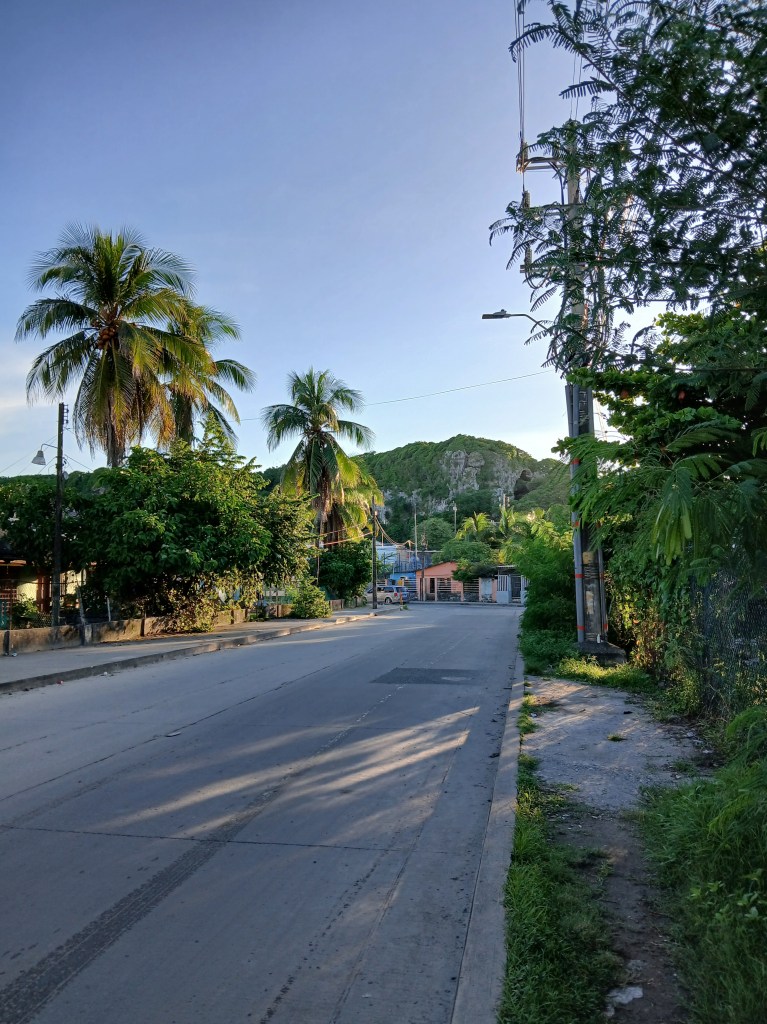
Once I reach my accommodation, my host takes me on a quick tour of the main town. As night falls, the palm trees on the seafront silhouetted against the ultramarine twilight, he drives us down the main streets of the clean and modern part of town, thronged with tourists, and points out some of the many perfume shops. They were originally set up by Lebanese businessmen, and are now used for money laundering.
San Andrés’s location in the Caribbean makes it useful to cartels looking to clean dirty money. Plus, the local tourist industry mean they can supplement the perfume shops with hotels, for more effective laundering. It’s regarded as an open secret, and alongside tourism, forms the backbone of the island’s economy.
Day 3

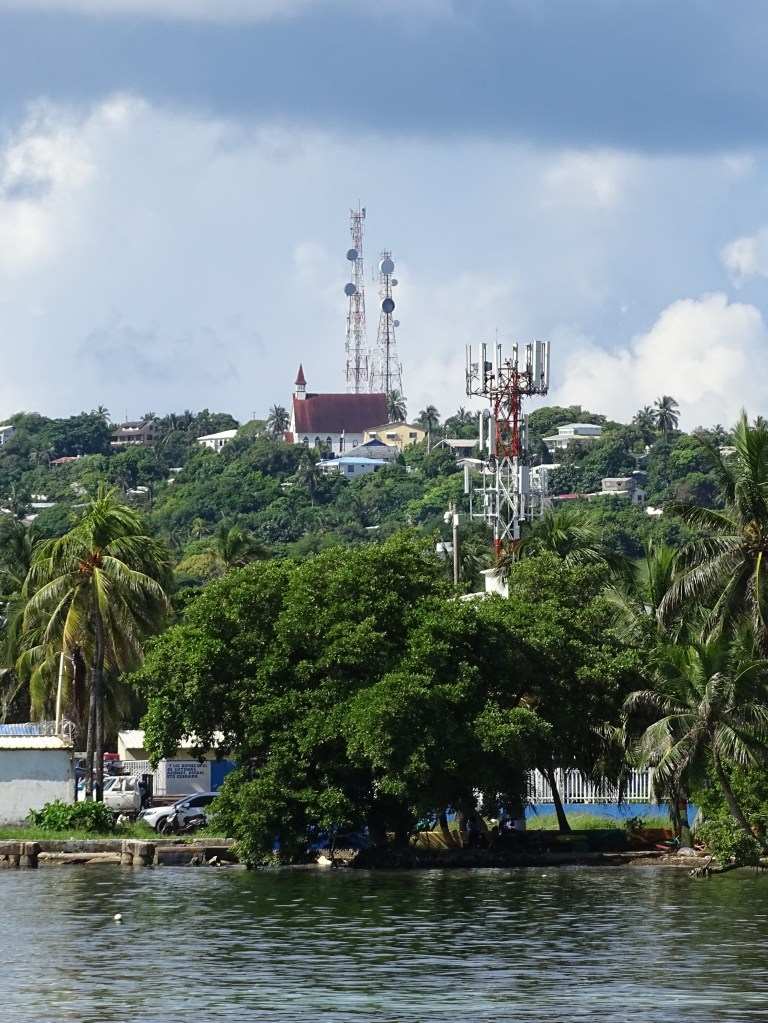
I can’t find anywhere nearby to have a proper breakfast, but I’ve bought some bananas. I also bought a kind of pasty at the same shop, but gave up on it after two bites. The odd yellow pastry and egg filling I might have tolerated, but the taste of soap I could not.
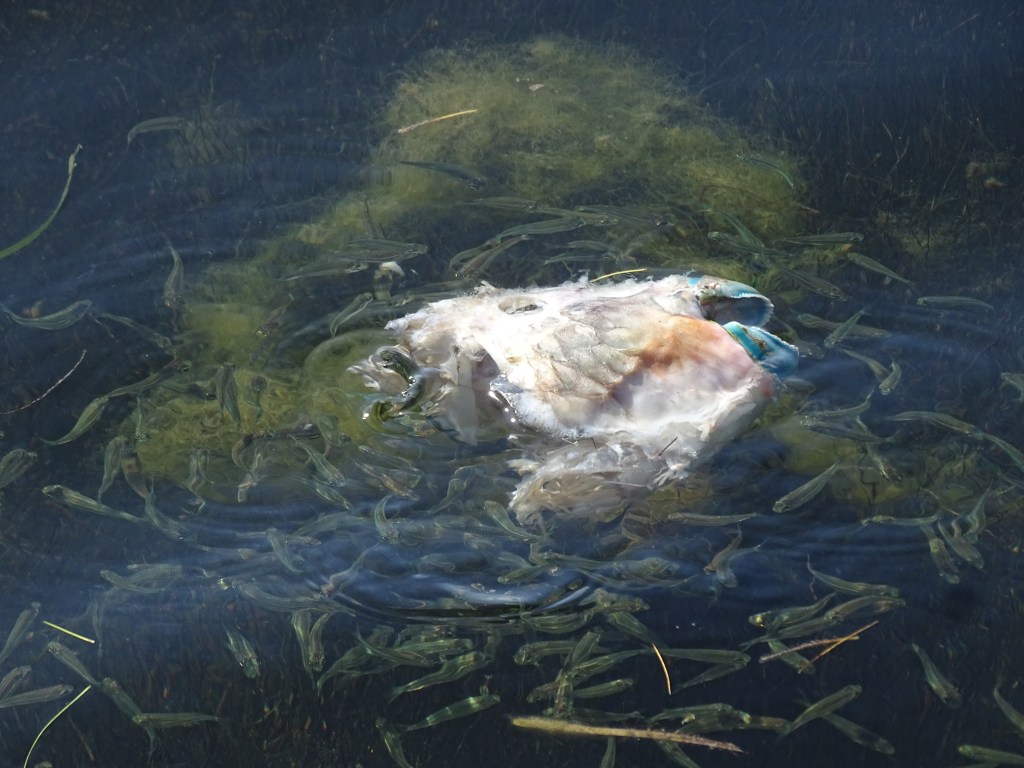
In the morning light, the sea is crystal-clear and full of both fish and boats. Floating on the surface, there’s the disembodied head of a parrotfish, beaked mouth agape, being nibbled on by a shoal of tiny fish. It’s a macabre scene in this tropical paradise, but given that parrotfish live in coral reefs, it’s also a reminder of how rich these waters are. I’m looking forward to exploring the island, but I’m rather taken aback by the heat, which, combined with the humidity, is more punishing than I expected.
No beach just yet, I don’t think – the good ones are on the south side of the island. For now, I’ll just wander around a mangrove forest, which is only a half-hour walk away.
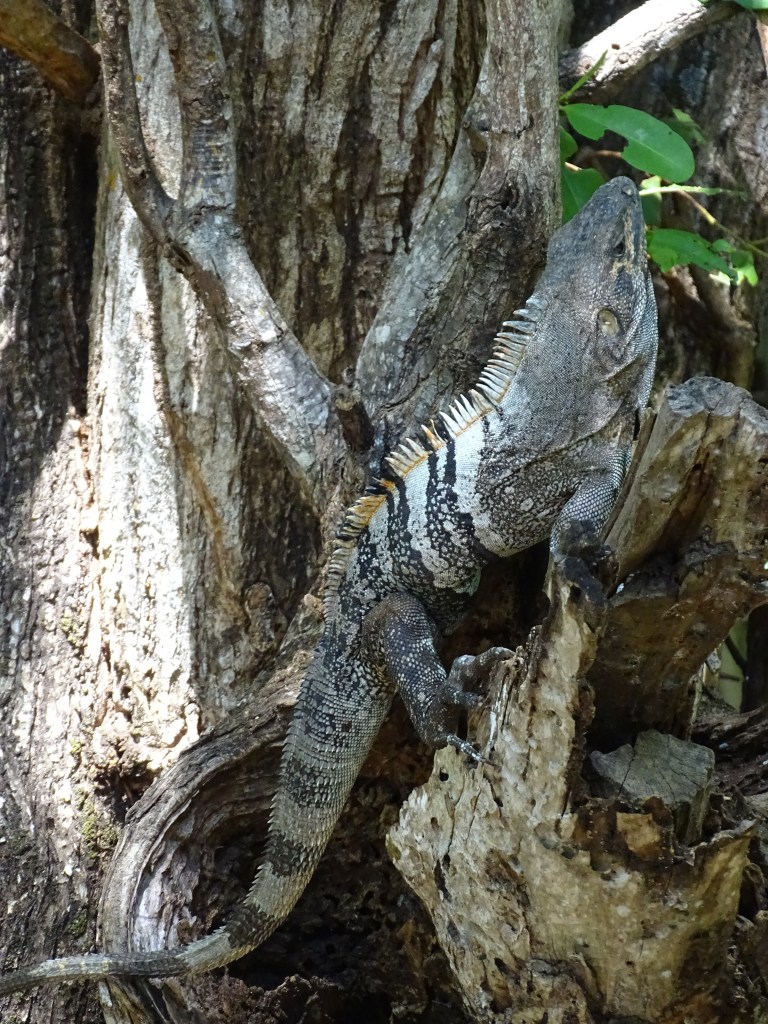
The half-hour is a struggle. The heat is still sapping my stamina at an alarming rate as I walk down the road out of town. Eventually I reach the mangrove, where large grey iguanas scuttle up trees as I stagger past. At least the shade of the trees and breeze off the water provide some respite here. Still, my phone keeps switching itself on in my sweat-sodden trouser pocket, so I put it in my shirt pocket before sitting down to rest on the boardwalk over the swamp. It doesn’t seem to help the exhaustion much. After a while, I get up, but as I approach a lagoon, I lean over to sit down again.
My phone falls out of my pocket and, slotting neatly through a gap in the boards, plops into the water below.
I freeze. The fact that I have a semi-functional spare phone does not detract from the overwhelming feeling of disaster.
Eventually, I realise I should probably at least try to salvage the SIM card or something. I climb off the boardwalk, and squatting in the swamp, rummage in the muddy water for my phone. Finding it and climbing back onto the boardwalk, I dry it with a small towel I have in my bag and clean out the charging port with a tissue. I force myself into a vague facsimile of optimism and try to explore the mangrove a little further before deciding that I should probably go back to the accommodation and attempt to do something about the situation.
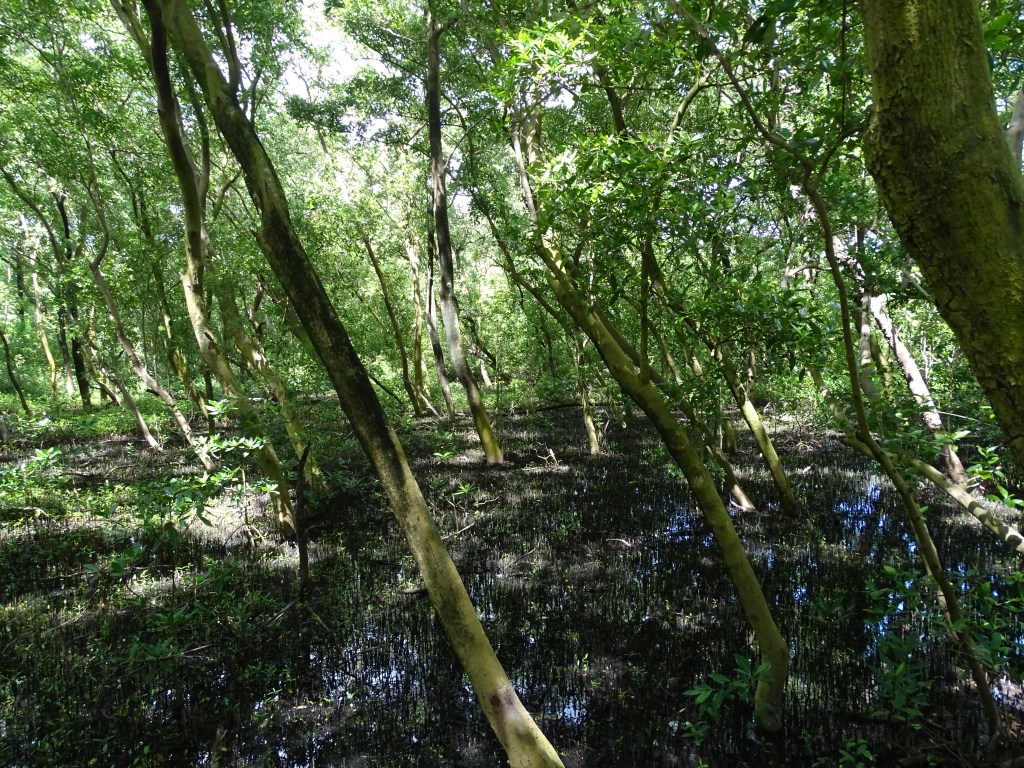
Already weakened by the walk to the mangrove, on the way back I realise that I’m in trouble. Each moment I spend out in this suffocating heat is grinding me down further, and I’ve lost track of how long it’s been since I’ve had a proper meal. Despite the heat, I’m starting to shiver. This is serious. Unless I miss my guess, this is one of the early signs of heatstroke. I force myself to keep going and stop wondering where on the pavement would be a good place to collapse. I struggle to find my way around towns and cities at the best of times, and being about as far as I’ve ever been from the best of times, I get lost, with no option but to use the map app on my sodden phone. Thankfully, it still works for now.
I’m too exhausted to even feel relieved when I find the accommodation. I just stagger to my room, drink as much water as possible, stick my head under a cold shower, then lie in front of a fan, panting.
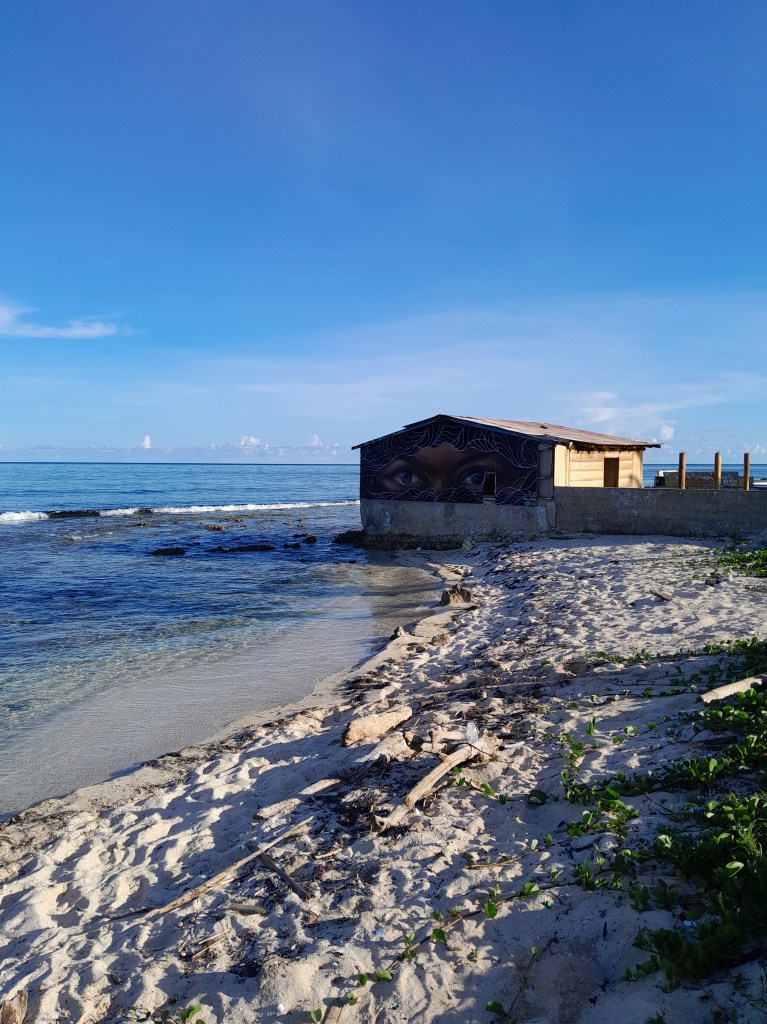
After recovering, I tried to have another go at exploring the island, only to discover that I’d been locked in. Eventually, my host called me through a speaker in the lounge to tell me to lean out of the window and unlock the door from the outside, enabling me to catch a bus to the village of San Luis. I tried to find a proper beach, but ultimately, I was forced to acknowledge that I was simply too tired and hungry. I admitted defeat and caught the bus back to town.
However, now that I’m alone in the hostel, I don’t feel I can actually go out to find a restaurant until the strange woman stops knocking on the door and shouting. There is a sign warning to not to let anyone in unless you’re certain that they’re a guest.
San Andrés does not seem to want me to leave.
Day 4
Waiting at the airport, I reflect on how my priorities have changed. I had arrived on San Andrés hoping I could make the best of my visit. Now I’m hoping I can just get off it alive. As I go through airport security I pat my pockets before going through the scanner, and find one more twist from what I’ve come to think of as the Curse of San Andrés.
There’s a knife in my pocket.
Tiny, but sharp, I was using it last night while trying to extract the SIM card out of my semi-drowned phone. None of the guards seem to have noticed, and I quickly put it in the forbidden items bin behind me. It’s a shame, as I was quite attached to that knife, but needs must when pursued by a pirate island’s curse.
Despite San Andrés’s best efforts, I successfully landed in Panama City’s impressively huge Tocumen Airport. The impression I quickly accumulate on the shiny new metro to the city centre is that this country seems so full of exceptionally kind people – from the waiter who gave me a welcoming speech after I had wasted some time at a café in the airport, to the various people I saw immediately giving their seats to the elderly and infirm on the metro – that it frankly baffles me.
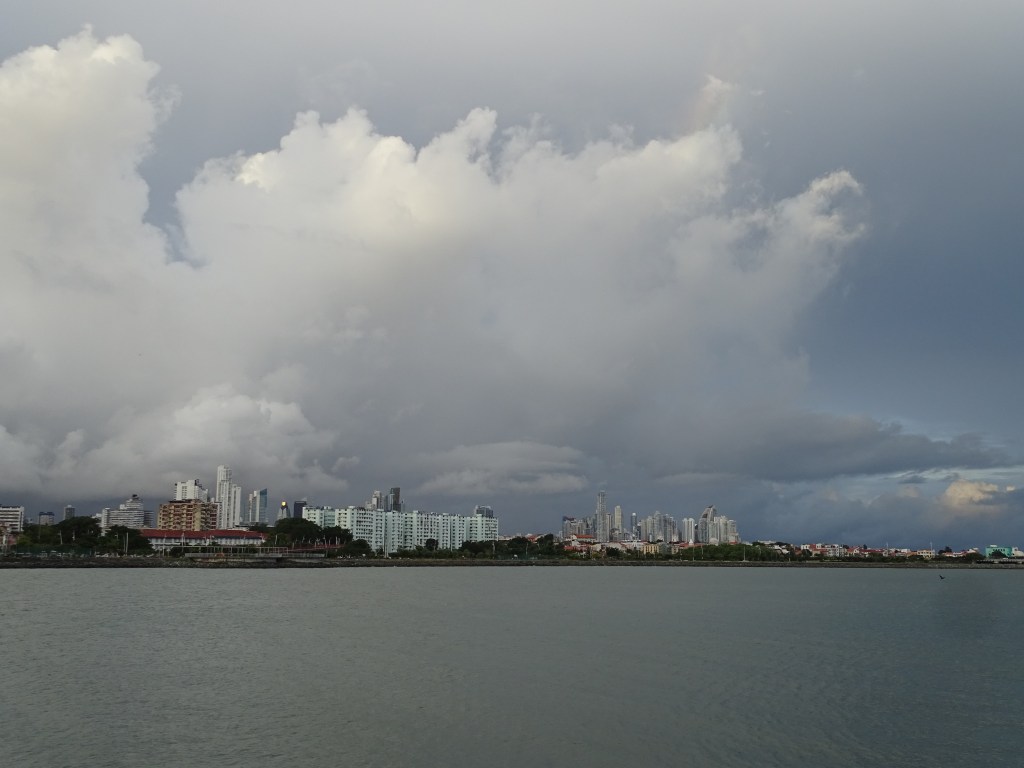
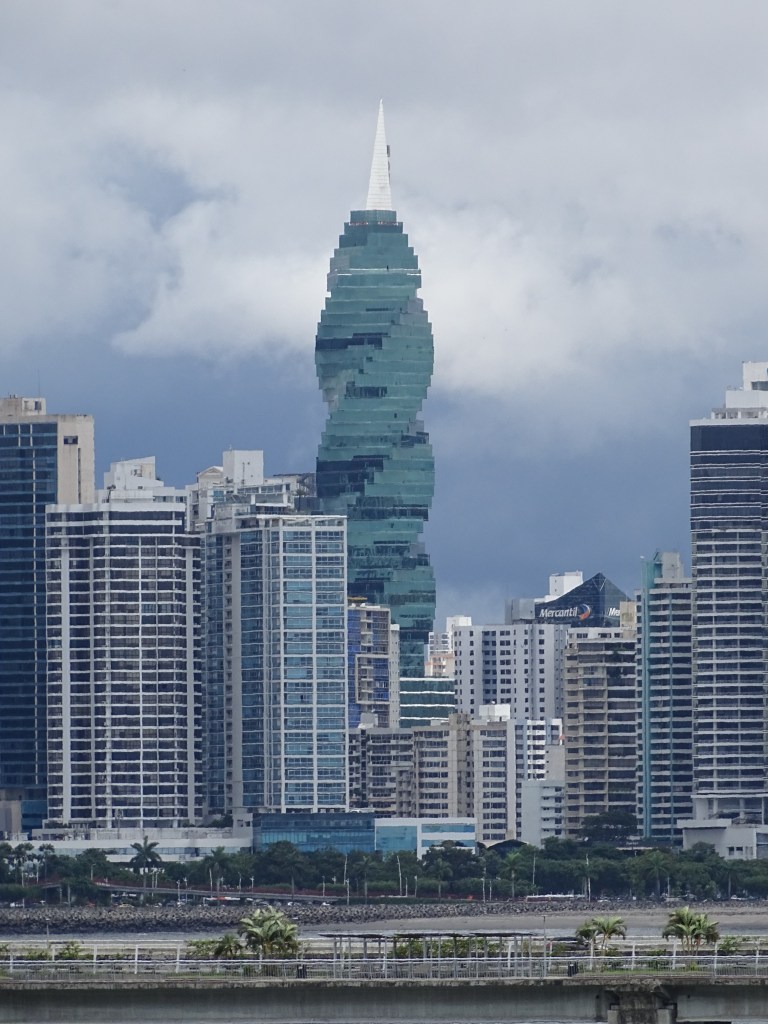
The hostel is thankfully comfortable, and, miraculously, I discover that my phone survived its mangrove adventure. As it took a while to reach the hostel, which is on the western fringe of the city, it’s late, but there is still just enough light left to walk to the shore and look across the Pacific and the cityscape of blocky residential buildings, the tile-roofed old town quarter, and grey skyscrapers.
Day 5
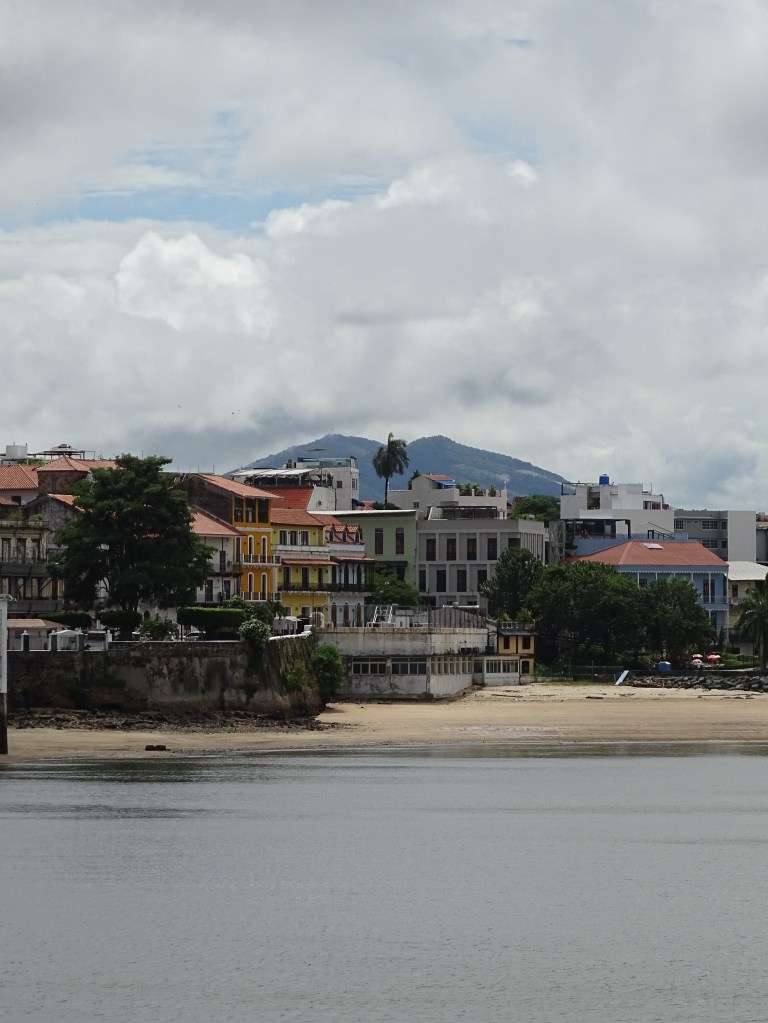

Through the window of the taxi, the difference between the poor neighbourhood (or barrio) of El Chorrillo and the old town quarter of Casco Viejo is stark and sudden. The streets transform from dirty to pristine within a blink of an eye. The other difference is that El Chorrillo is thoroughly lived-in, but Casco Viejo, with its pastel-painted buildings and wrought-iron balconies, is just a playground for tourists. I can see no sign that anyone actually lives here. At least there’s a café that serves Panamian cuisine, which is mostly combining meat, rice, and lentils. That said, I’m quite certain that the server deliberately misheard me so I would end up paying $8 for a special “luxury” coffee. I had only heard of $8 coffees in satirical jokes. Apparently I’m the butt of one now.
Leaving behind this pretty but empty shell with its tour groups and expensive coffees, I stroll along the seafront. Away from the old town, past the native women selling trinkets from makeshift stalls, clusters of skyscrapers stretch into the hazy distance.

Further along the seafront, seabirds fly above the working fishing boats, then land on the decrepit ones, drifting in the harbour with collapsed roofs and grass growing on their rotten decks. I can’t quite work out what this shows about Panama’s economy, with boats abandoned in the midst of what seems to be a busy industry.
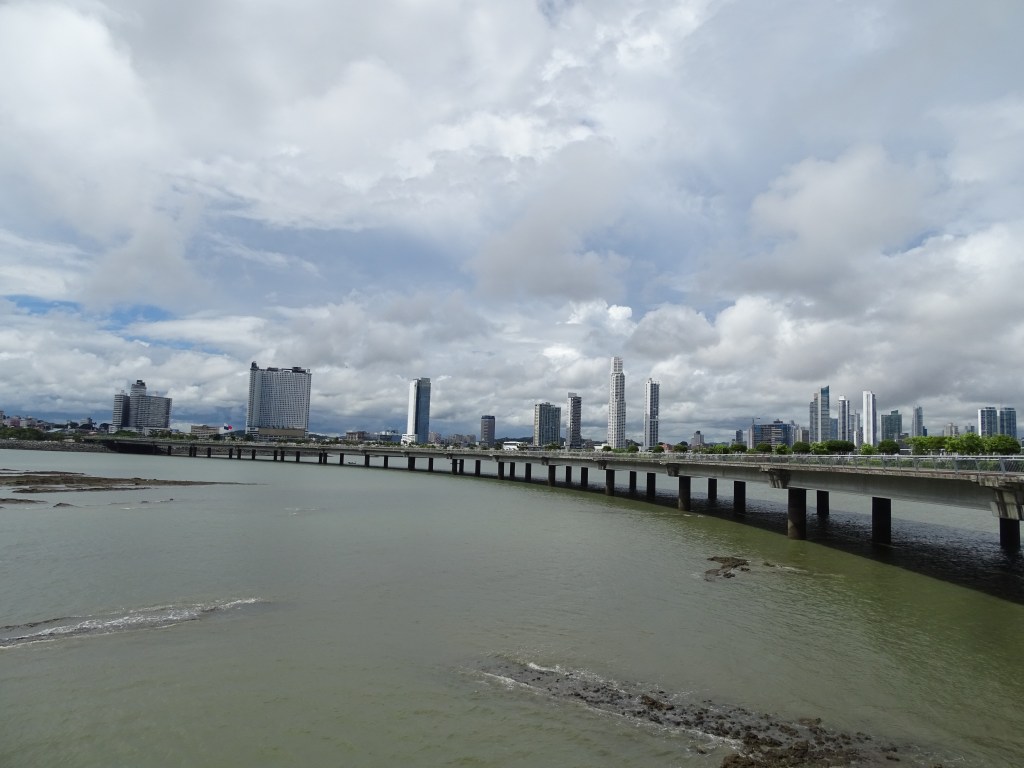
Although it’s not as bad as San Andrés, the heat is stifling enough to drive me onto Cinta Costera, a shiny new road and walkway that arcs over the sea around Casco Viejo, in order to pursue a sea breeze.

Day 6
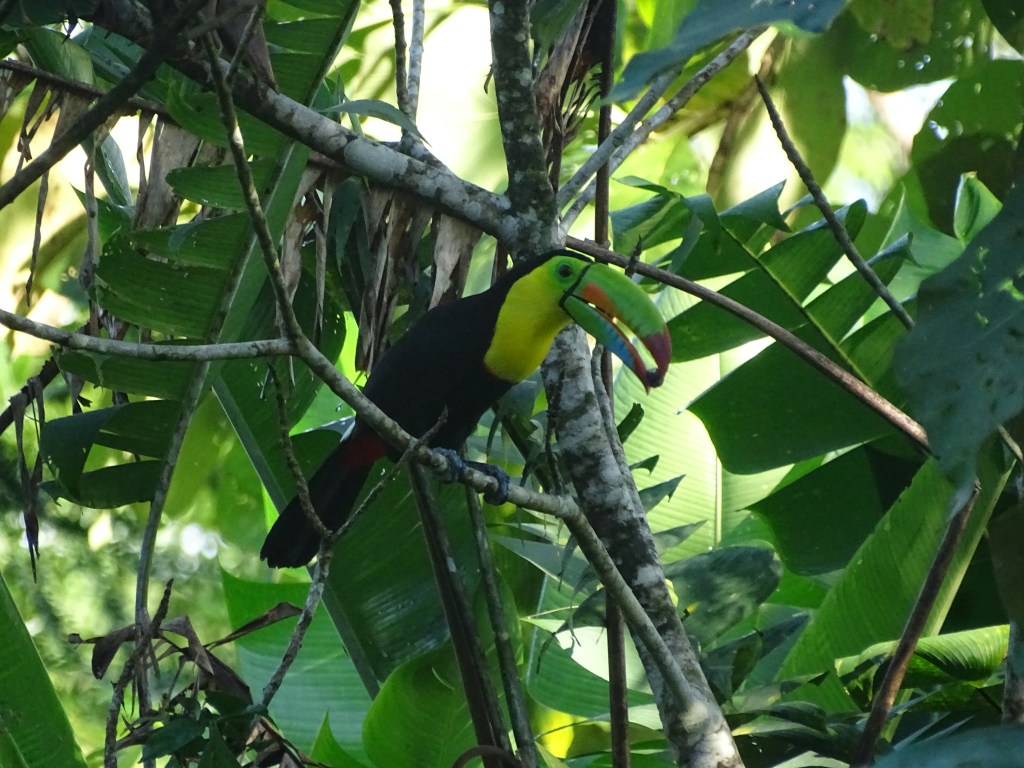
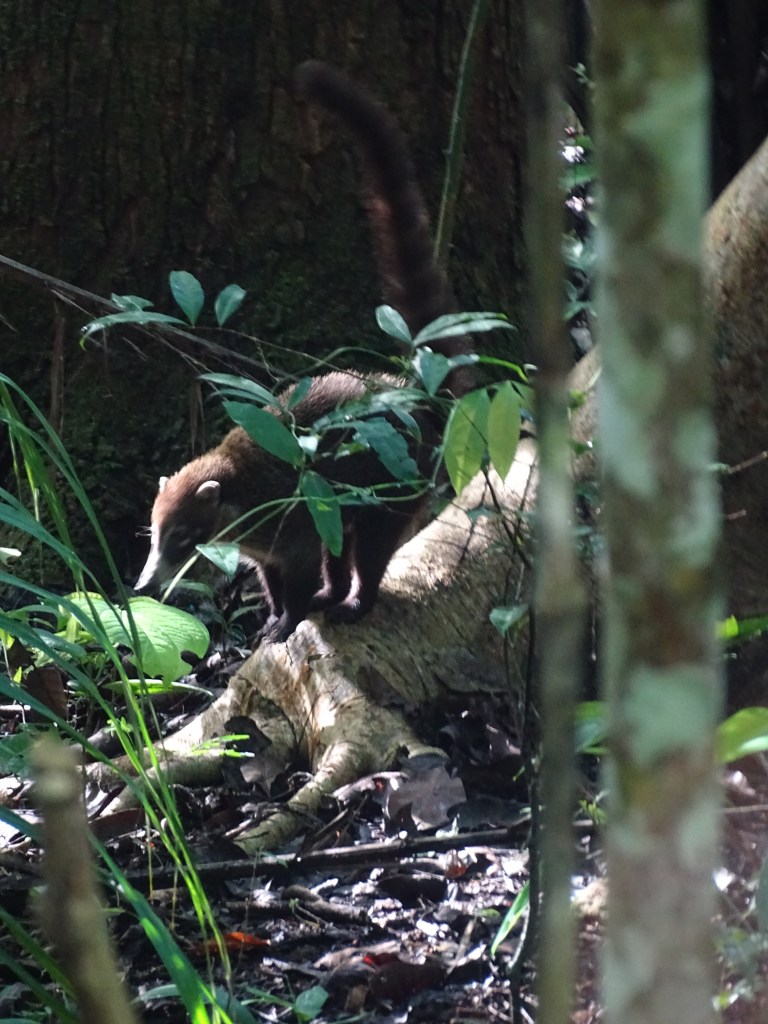
Untamed jungles are usually hard to reach, but I could get to Soberanía National Park with just a forty-minute taxi ride. As I understand it, it’s preserved because the forest is an important part of the neighbouring Panama Canal’s structural integrity. As I walk from the park headquarters along the main road, between tarmac and jungle, I pass a surprising amount of cars on the former, and parrots, a toucan, and a massive spider from the latter. I eventually turn off the road, out of the bright morning sunlight, and onto a trail into the murky forest. Coatis scatter at my approach, and watch me suspiciously from the safety of the undergrowth. There’s a booth marked “Police”, but it’s unoccupied.
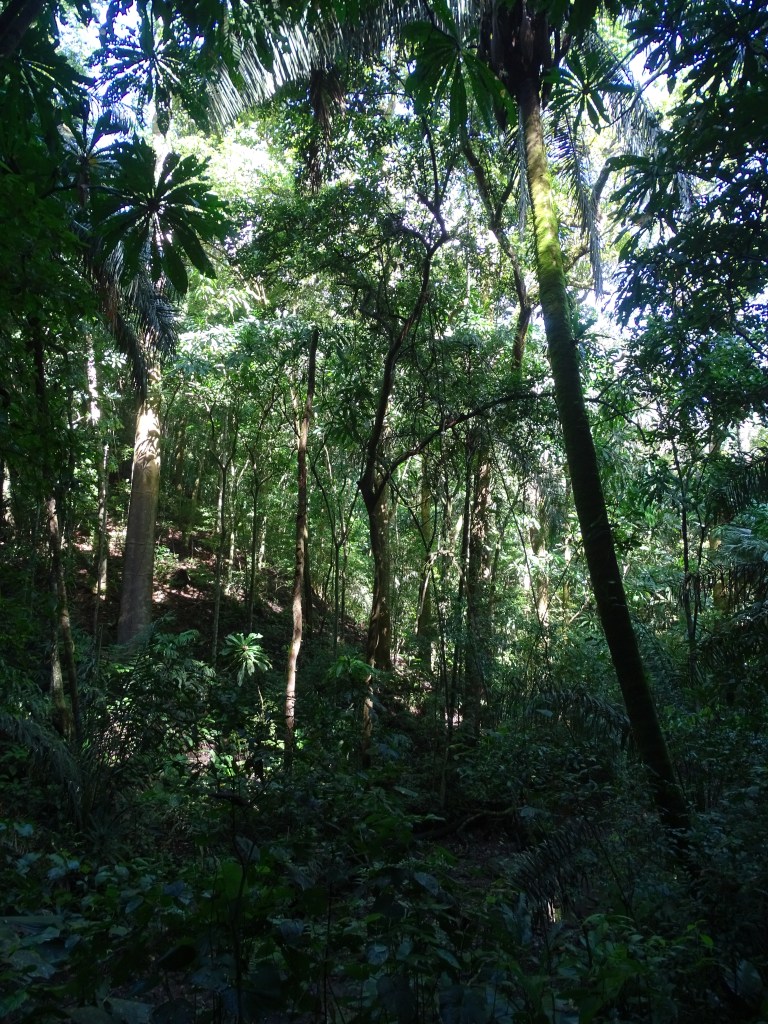
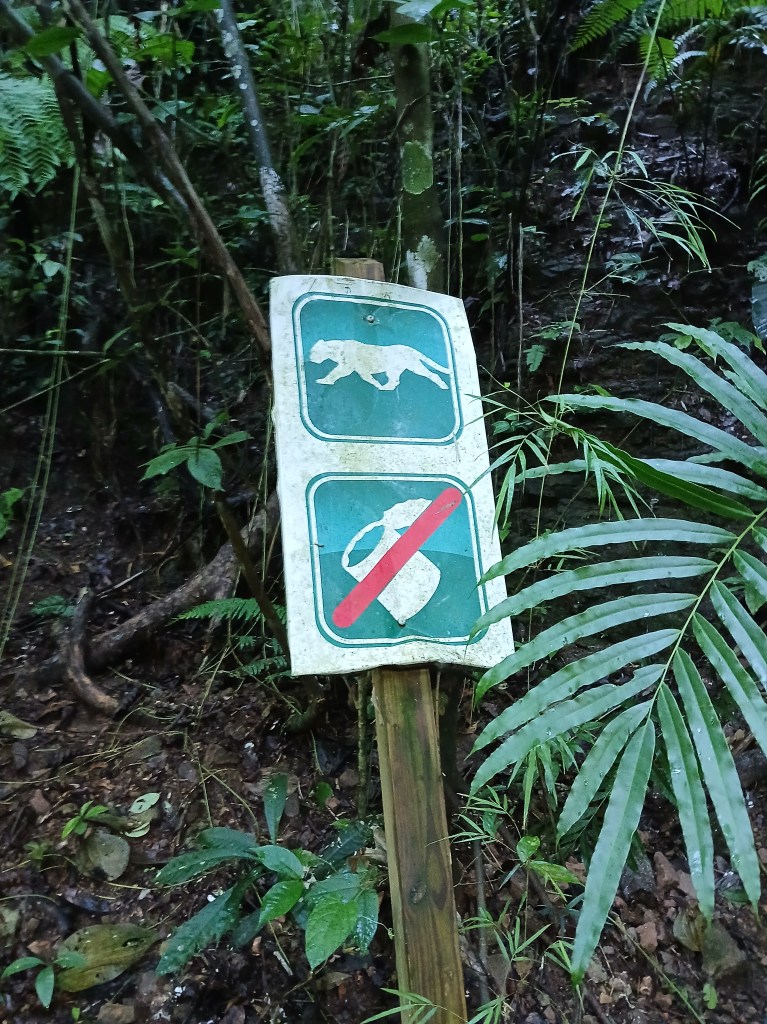
I had assumed, given how close to the city this rainforest is, that I would have to share these paths with other tourists, but other than the occasional glimpse of rabbit-like agoutis in the undergrowth and enormous butterflies fluttering overhead, there’s no-one else here. The jungle is exceptionally dense, and little sunlight penetrates its primal-looking tangle of vegetation. I pass a sign warning about big cats – either jaguars or pumas, or most likely both. As it sinks in that I am very much alone here and there are no other people for miles, I start rehearsing in my head what the plan of action is if I do encounter a jaguar. Then I realise that there is no plan. The thought sends a thrill down my spine, and makes me step a little slower.
On the way back, I finally pass another human being – a man filming with a drone by a stream. He leaves quite soon, though, and he might have the right idea. I have been half-expecting it to rain, and while I know from first-hand experience how intense tropical rain is, this is the first time I’ve heard it approaching. I pick up the pace as the sound of vegetation being flattened by the deluge gets closer and closer.
I’m not quite fast enough, and get a brief but very thorough soaking just before I run into a shelter. It’s a white, open structure, like a bus stop. I’m not entirely sure what it’s original purpose was, but it’s completely empty. In fact, I make double sure of it, aware that this is the kind of place where snakes like to hide. Now I just wait out the rain.
The “waiting it out” strategy isn’t working. I’ve arranged to be picked up at 13:00 next to the national park headquarters, and rain isn’t letting up. Nothing for it but to walk into the raging torrent. I have a brief, unhappily wet walk along the main road before a car stops and a woman offers me a lift. In the back of my mind, I had already known that I could count on Panamanian kindness.
The distance between the hostel and the rest of the city, as well as the fact that the nearest restaurants close at five o’clock, has been making meals a little awkward. I had been having one proper meal a day, then getting snacks from a shop nearby, run by an Asian shopkeeper who was amused by the realisation of what happens to a Northern European’s face when exposed to too much sun. But now, fresh from the jungle in the afternoon, I can have my last proper meal in Panama in a small restaurant from a friendly waitress who speaks perfect English. It’s meat, rice, and lentils again. After I pay, I turn to see, on the wall-mounted TV, a breaking news report of a tornado in the city. I stand there for a moment, uncertain. It’s in the city for now, but still, what do I do when caught on the fringes of a disaster zone? I relax a little when I realise that it’s not a tornado, but rather a waterspout just off the coast. Something closer to tornadoes of water, they’re harmless to those on land. No need for me to panic, at least.
Probably.
Day 7
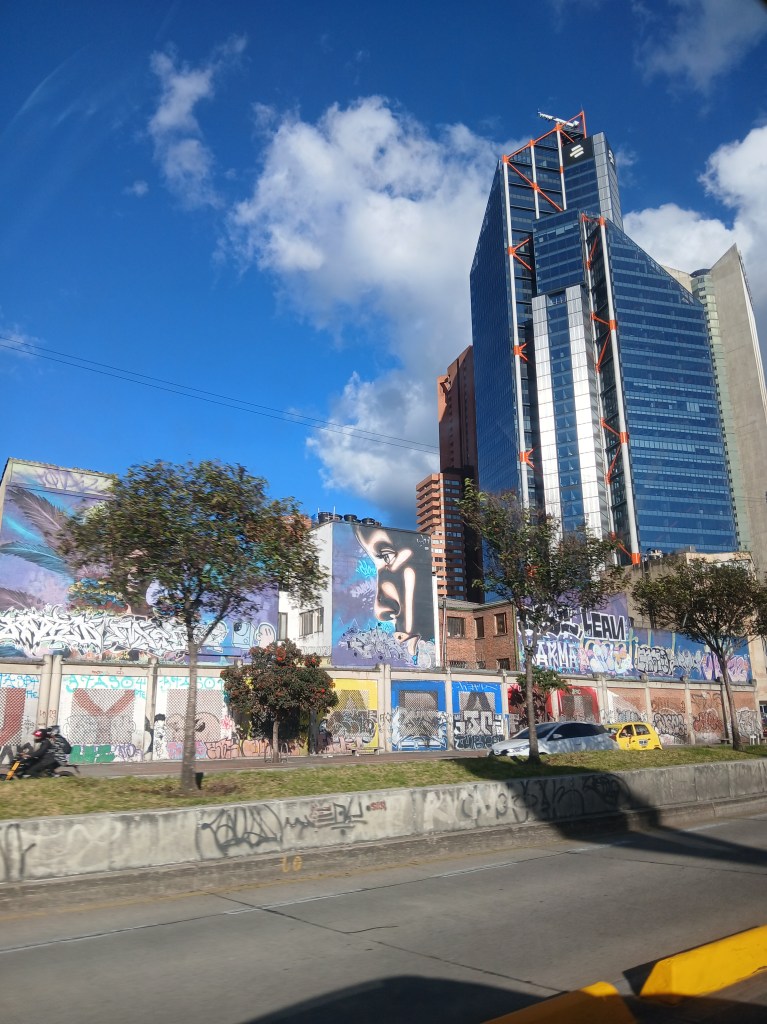
Another pair of airports, then another city, then another hostel. I didn’t have the time or the inclination to go into Bogotá when I was here last time, so now I can properly witness it in all its graffitied glory. It is usually strikingly good graffiti, too, apparently common all over Colombia due to lax graffiti laws. The hostel I’ve booked (“The Cranky Croc” – founded by an Australian) is very highly regarded, so I don’t know why I’m surprised that it’s so nice.
Day 8
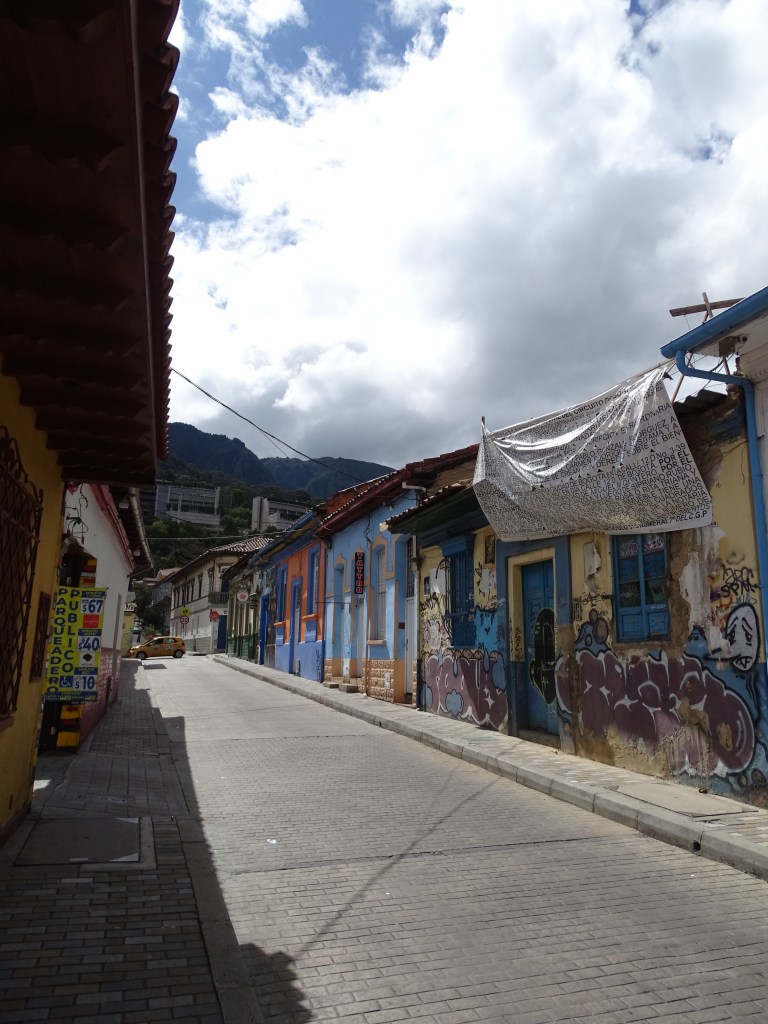

I am no good with cities. Never entirely certain how to make the best of them, I usually end up just wandering around. I suppose here I can look for Colombian cuisine. First, chocolate completo, a traditional Colombian breakfast or morning snack of hot chocolate, cheese, and bread, in La Candelaria, the main tourist district. It’s the tourist district because it’s the old town quarter, but I struggle to see how it deserves it. The hallmarks of mass tourism – hotels and restaurants and people selling brightly-coloured tat – are plastered over streets of low, tile-roofed buildings that are noticeably run-down.
La Macarena, north of La Candelaria, where I am venturing in search of a decent bowl of ajiaco – chicken and potato soup – is much nicer. It’s hipsterish and chic, and contains the occasional example of striking modern architecture. Bogotá seems to do cool and modern better than it does pretty and traditional.
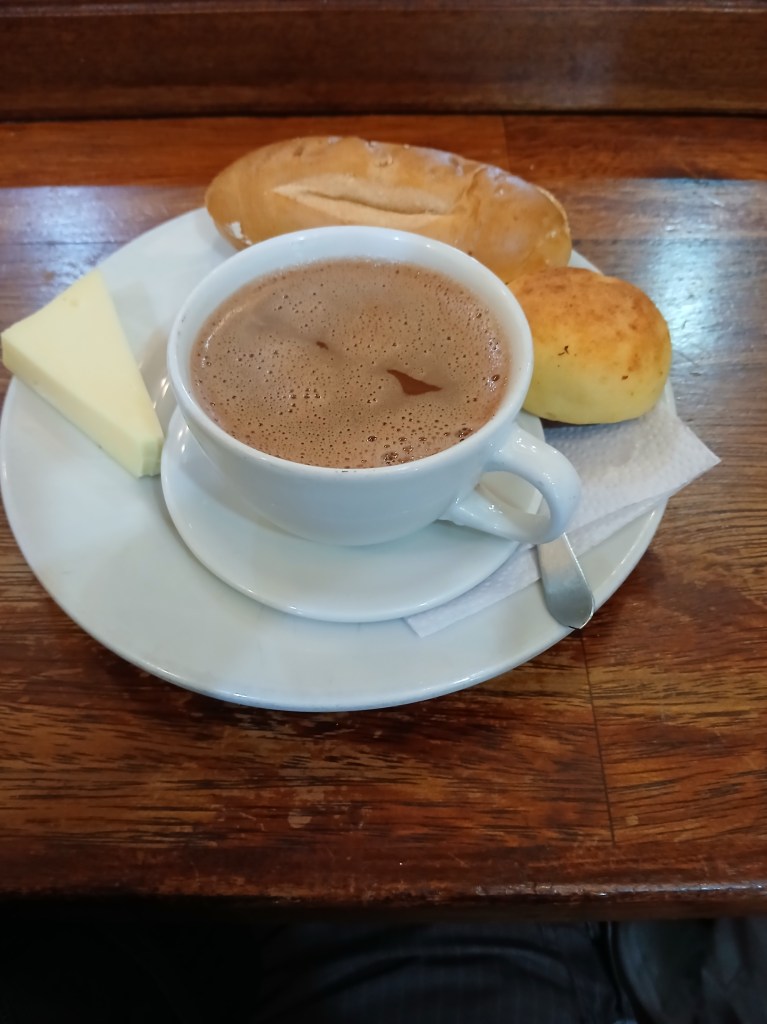
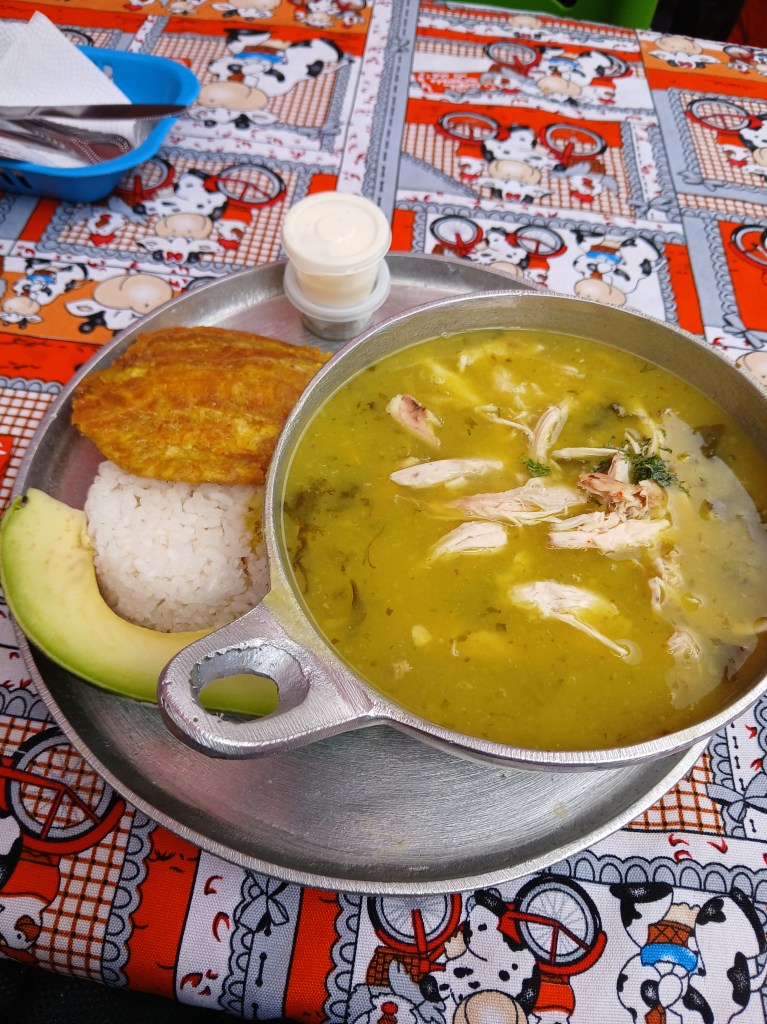
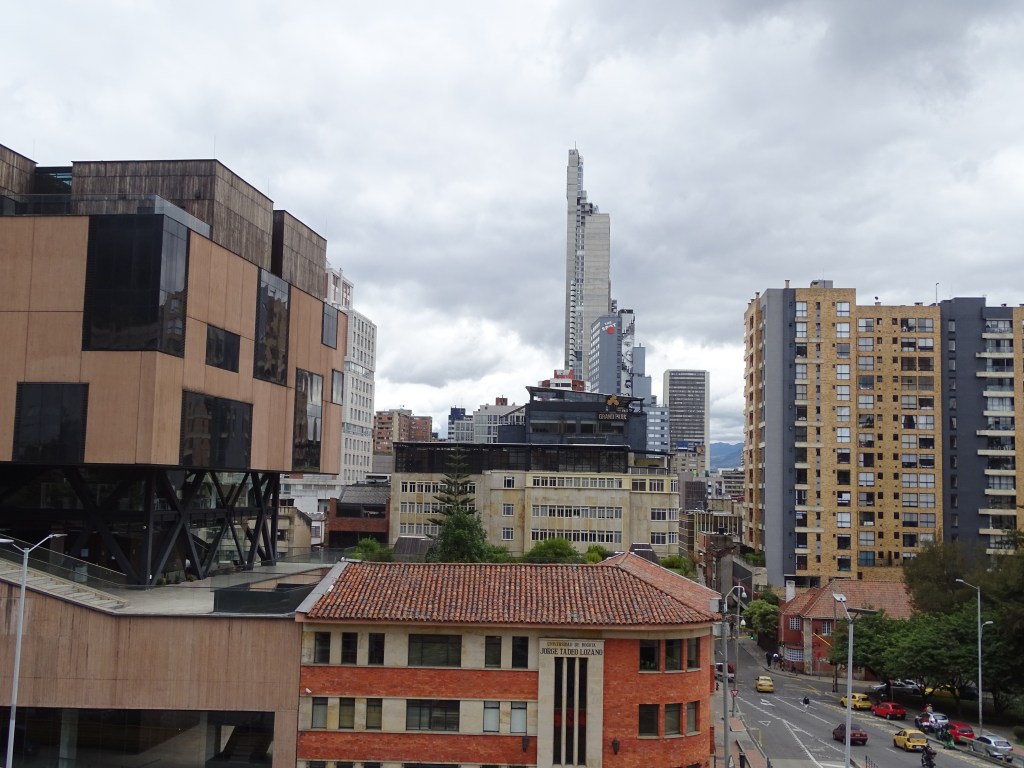

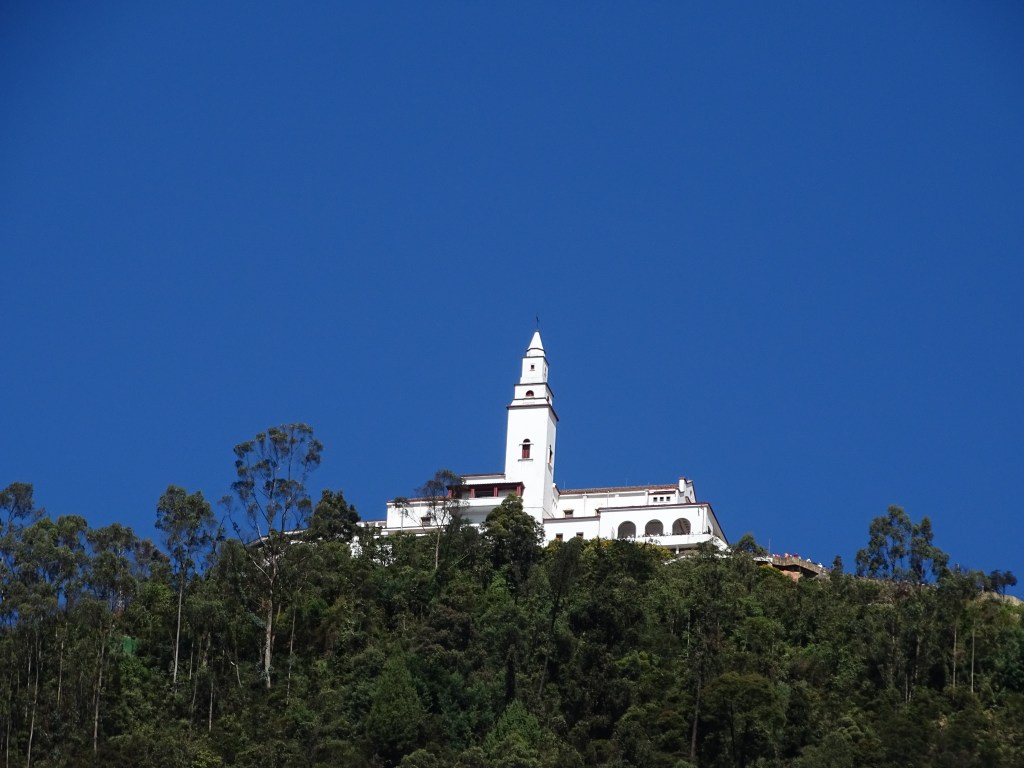
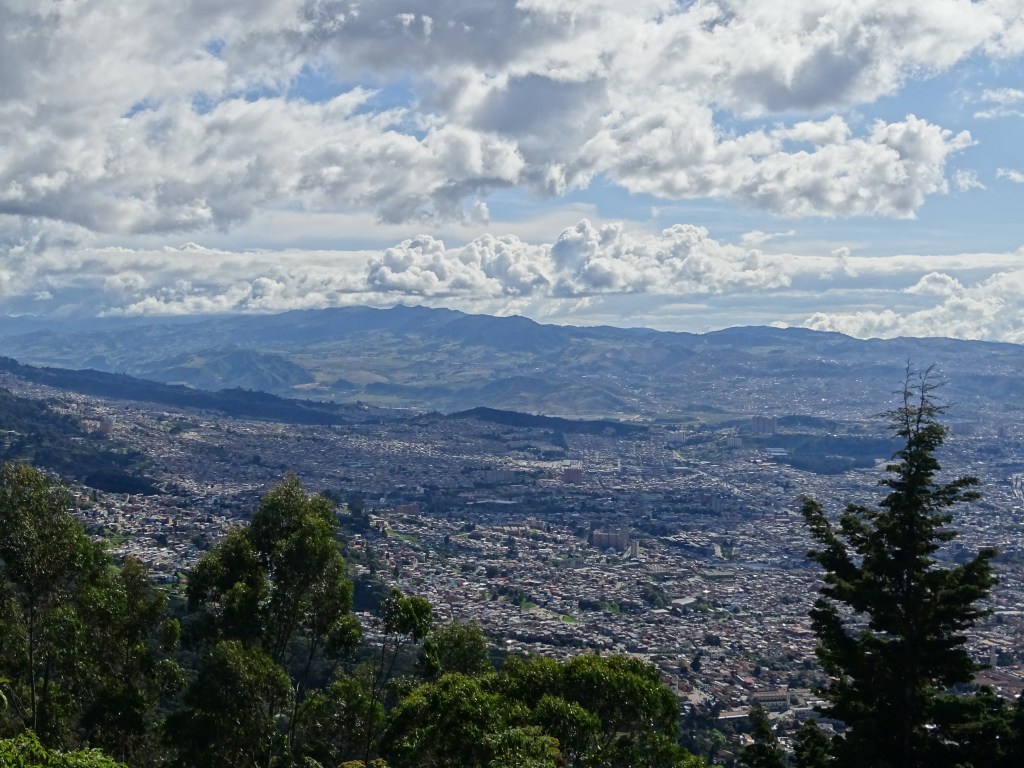
Well, that’s Colombian cuisine sampled. Now, I suppose I could…go to Cerro Monserrate? It’s a church on the summit of a mountain that overlooks the city. The views must be impressive, so it’s as good an idea as any. There’s a cable car and a funicular railway up. I could also hike up, but the altitude here can cause serious problems to the average human body, and if I wanted to risk my life here, going to one of the barrios would be a much more interesting way of doing that.
Day 9
Technically, I could have caught the bus from Bogotá to Salento. On a map, they look like they’re right next to each other. The bus, in fact, would have taken 7 hours. So, yet another flight it is. It took less than an hour, but combined with the waiting and the taxi from the regional airport to Salento itself, it’s dark by the time I reach the small Andean town. This is another tourist hotspot, and the plaza is busy, with music blaring out into the night.
Day 10


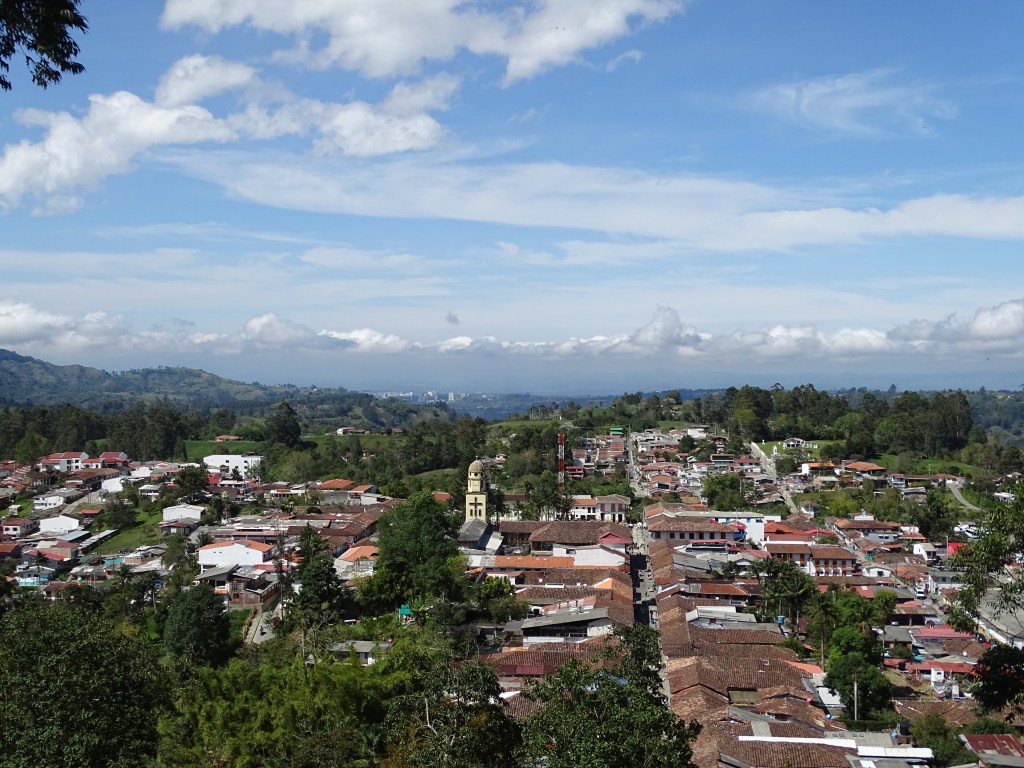
Salento is even more touristy than La Candelaria, but at least it feels like it’s earned it. This brightly-painted little town is genuinely pretty, and nestled at the foot of verdant green mountains. The streets, however, are utterly packed with tourists. They’re mainly Colombian – I think it’s some kind of bank holiday weekend here. Once again, I’m good at choosing where to go, but possibly bad at choosing when.
Day 11
Going to Valle de Cocora involves catching a “willy jeep” – local WWII-era jeeps that are used for farming and public transport.
The ticket wasn’t expensive. In fact, it was willy jeep.
(I will not apologise)
From my sitting position on the bench, facing a pair of excited Middle Eastern or North African young women who ask me to take their picture with an old disposable camera, I can’t see where we’re going. I’m only aware that that we’re going past fields, then arrive at a misty forested valley.
At the start of the trail, there’s a post – consisting of a table and a canopy – where a man gives hikers a choice: a short trail that goes in a loop, or a long trail that goes to the summit of a mountain. The latter requires hikers to sign a register, and the man is insistent on its virtues, so I feel shamefully unadventurous in choosing the short one. As I start down the trail, I fondly imagine that I’ll finish it within an hour or two, then be back at the post to demand a crack at the big one.

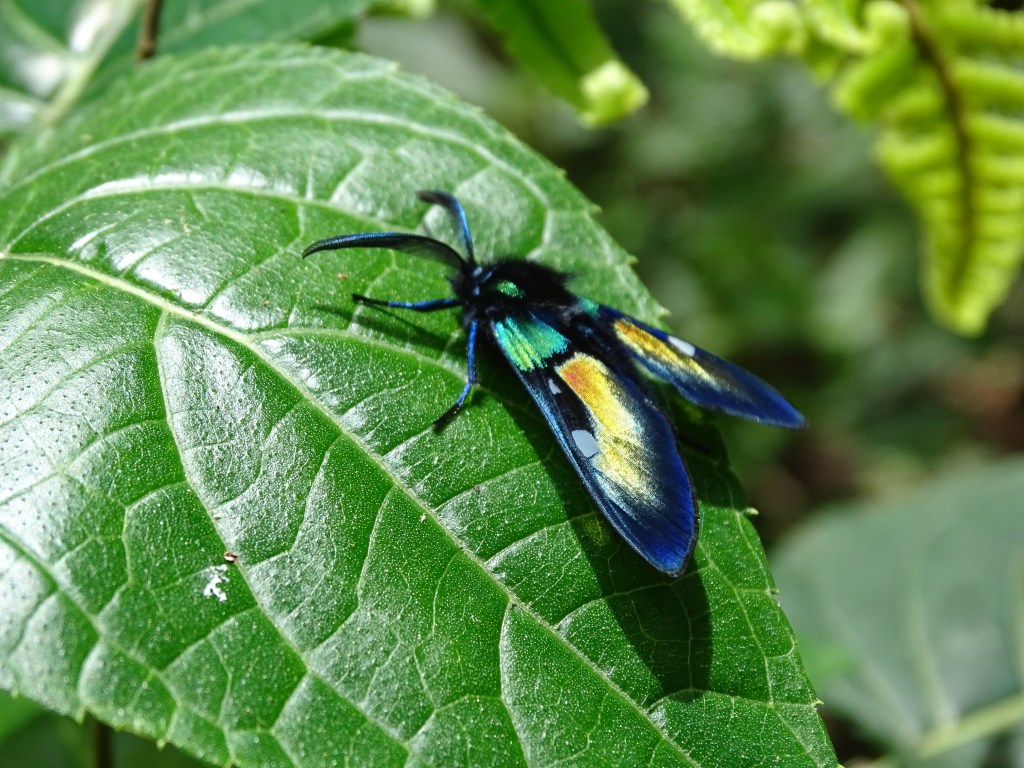
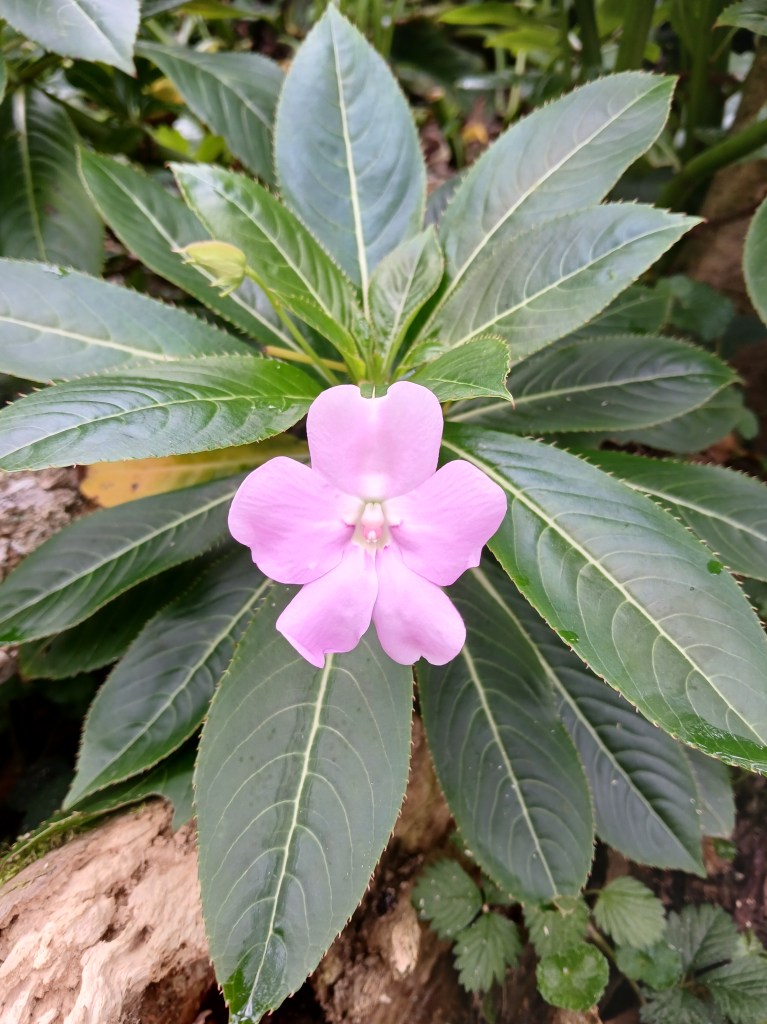
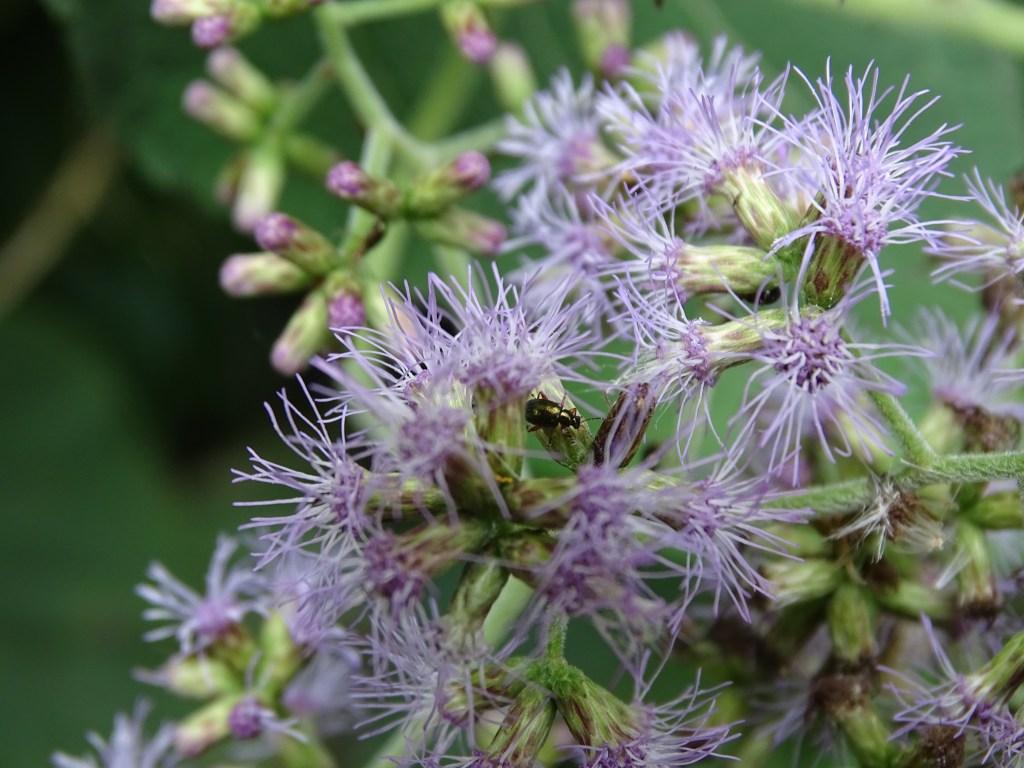
After walking past fields, I start ascending into the cloud forest. It resembles a cartoonist’s idea of a jungle, teeming with a multicoloured array of large flowers. But this is no jungle – a cloud forest is at higher altitude and thus, colder. No heat to sap my strength here, just altitude. Which, it turns out, is also very effective at reducing me to a gasping wreck.
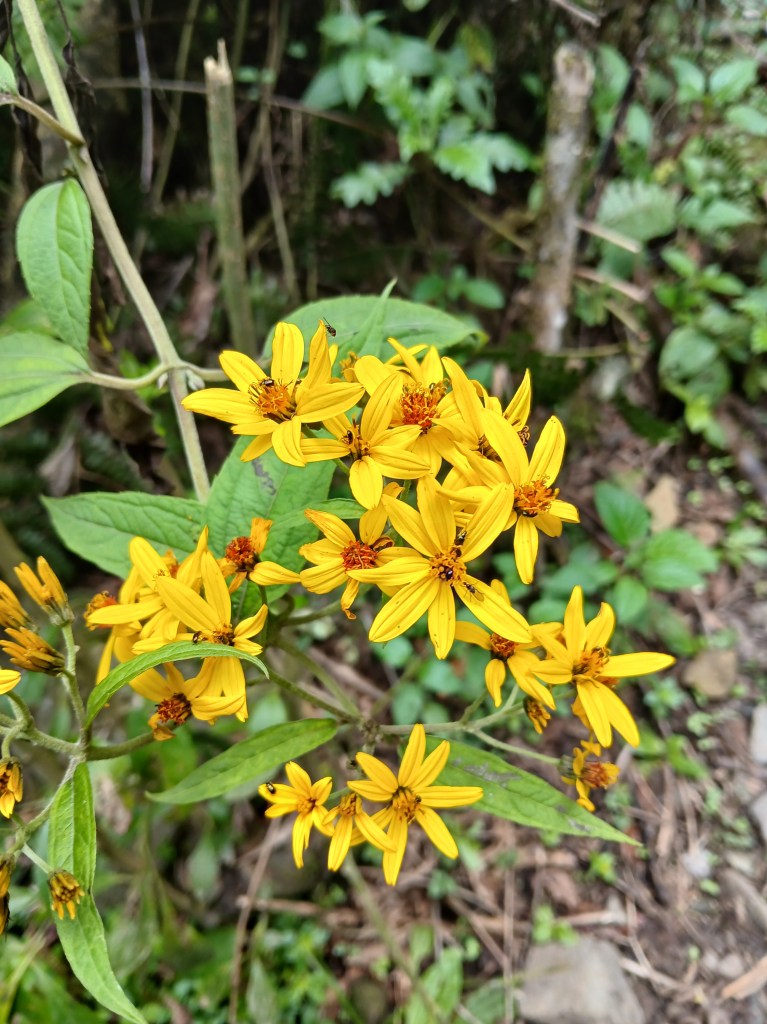
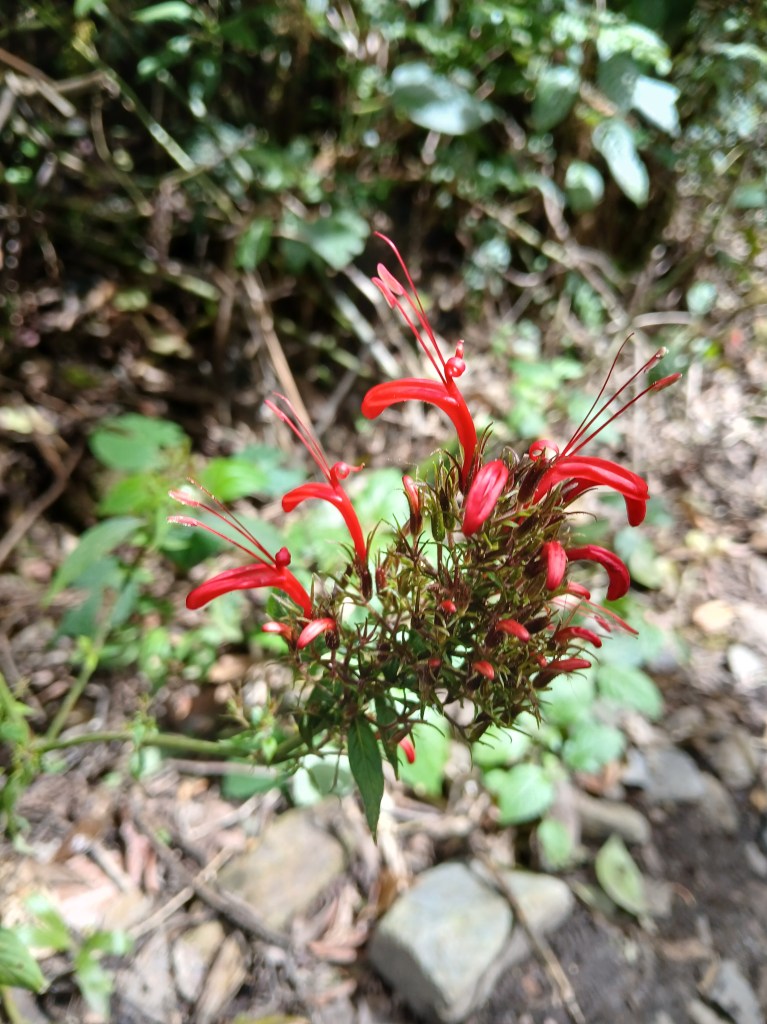
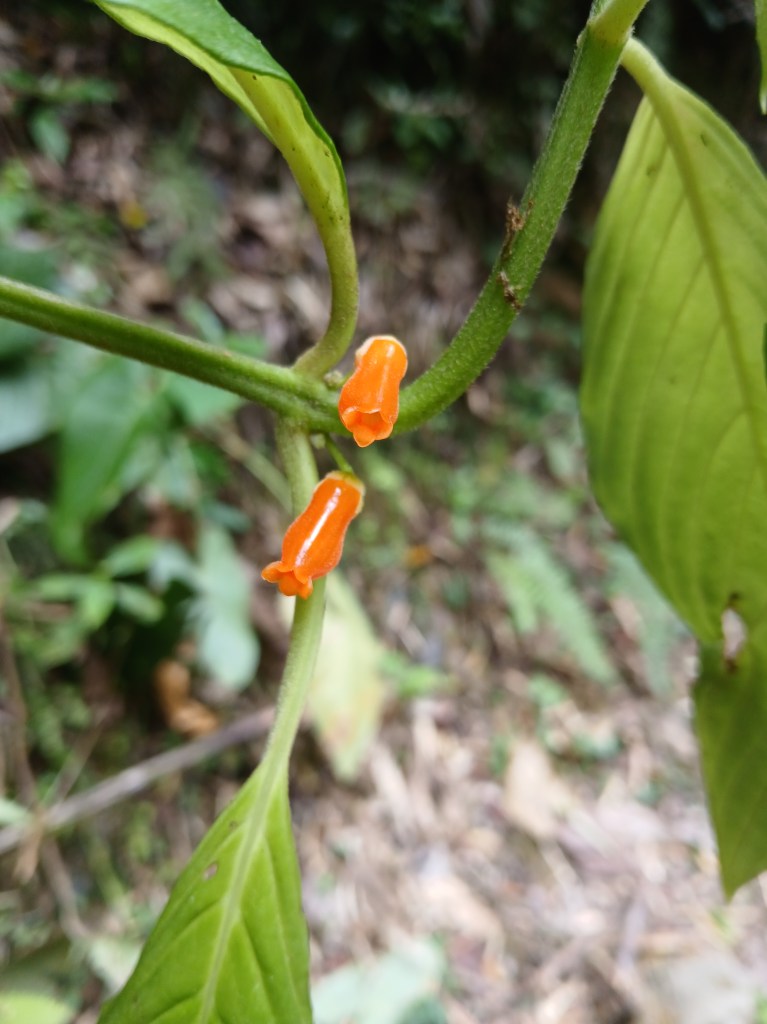
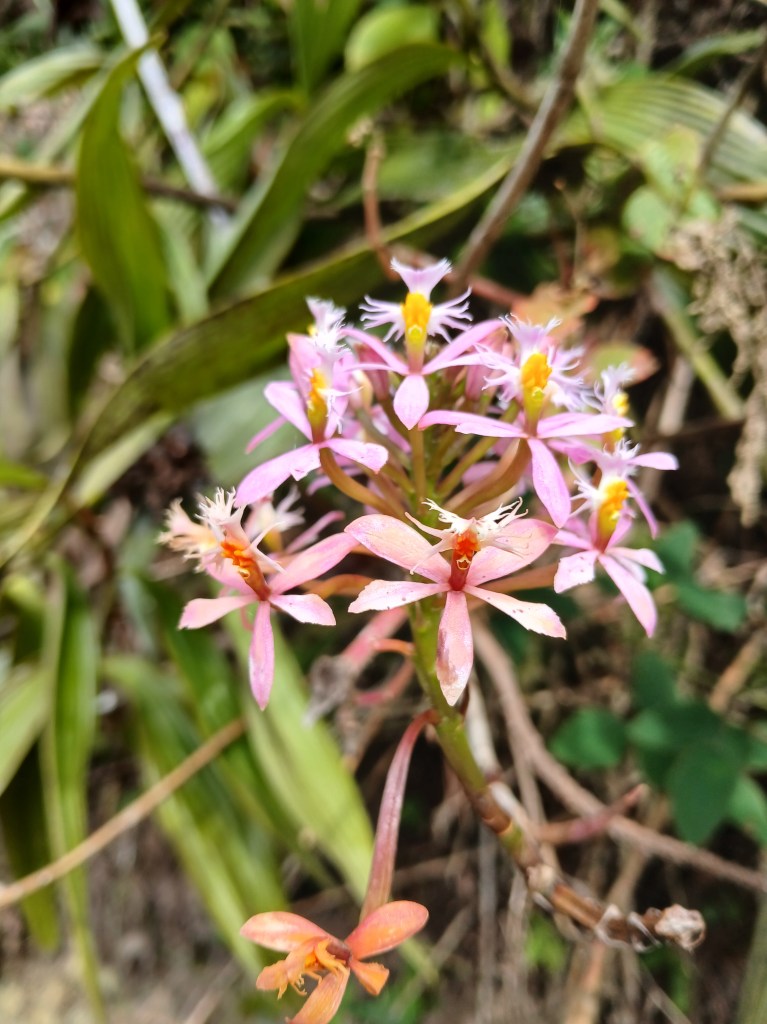
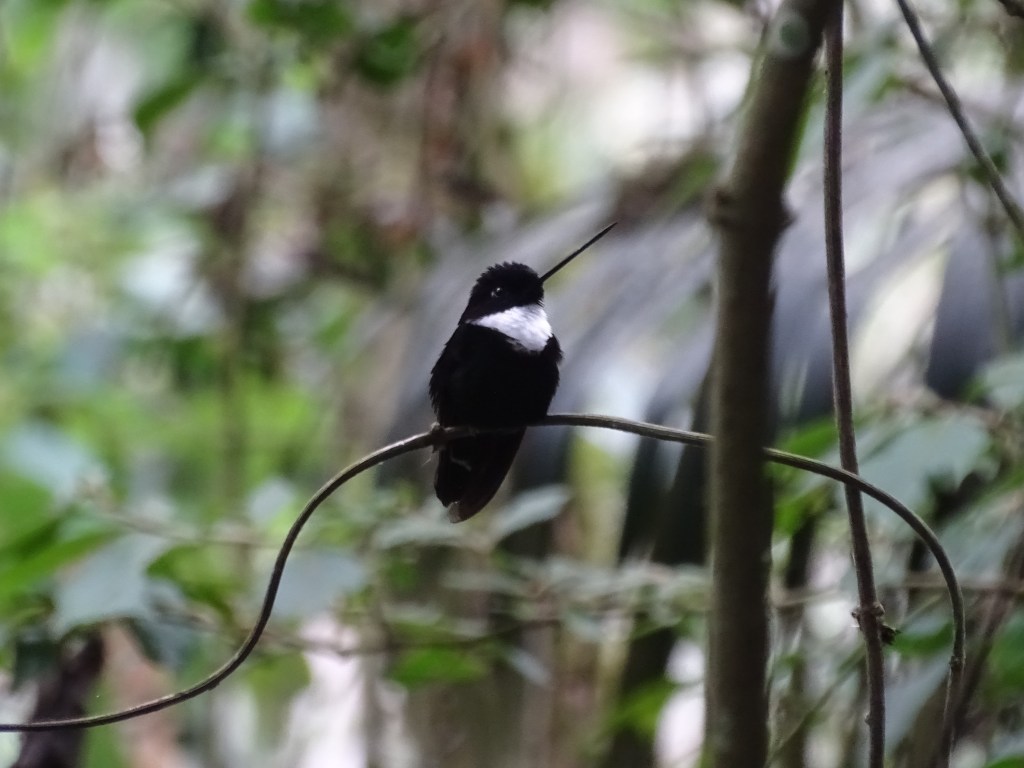
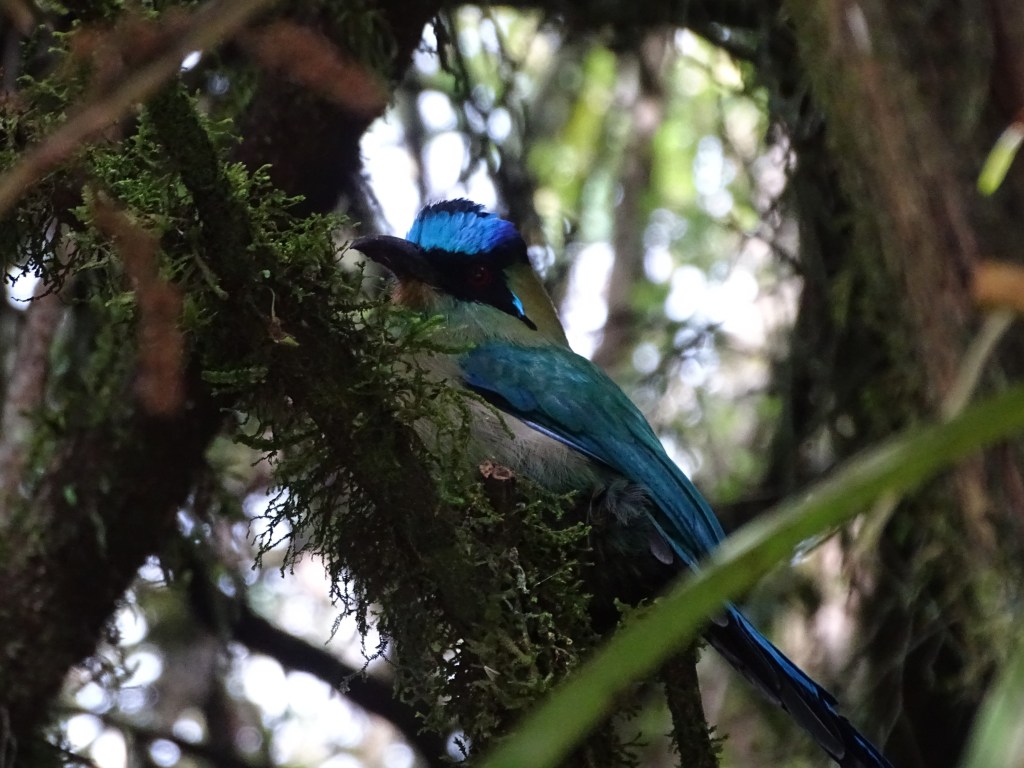
I stagger into Acaime Hummingbird Reserve, lured by the promise of a hot drink included with the entrance fee. As I sit on a bench, watching the hummingbirds flitter from the feeders to the branches and back again, each sip of coffee makes me feel stronger. I eventually regain enough brain function to speculate that the large but quite docile dogs that run free through the forest are probably livestock guardian dogs – there are horses and cattle in the fields, and pumas in the mountains.
After briefly falling in with a group of lost Portuguese tourists, I climb the side of the valley. The slope is so punishingly steep that I don’t care what the building with a fenced garden at the top of the path is, it only matters that it’s open to the public and has a bench. As I collapse onto the bench, wisps of mist rise out of the forest before me to coalesce into a silvery mass that steadily fills the whole valley; a reminder of why this is called “cloud forest”.
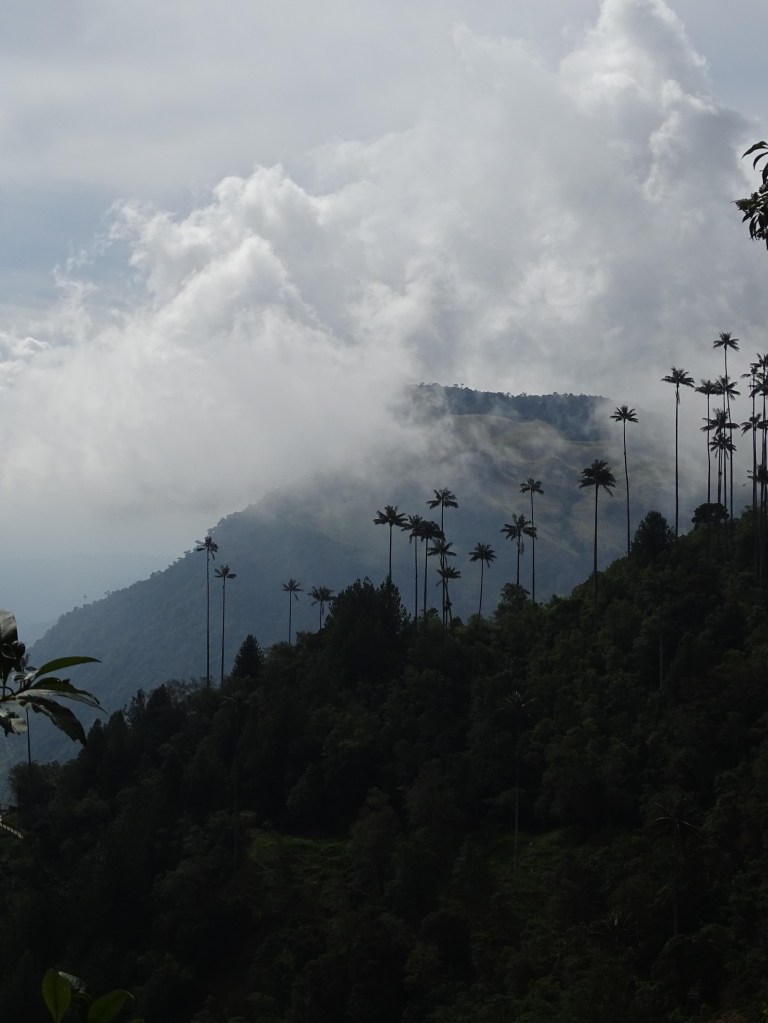
Finally past the worst of it, the trail starts sloping gently downwards out of the forest, which is gradually replaced by fields undulating over the slopes. Wax palms, their absurdly long trunks ending in shocks of fronds, become more and more common. As my surroundings become more tame and human-friendly, I start coming across broad wooden platforms for appreciating the views across the valley, including one occupied by a very bored-looking man running a snack stall playing pounding techno.
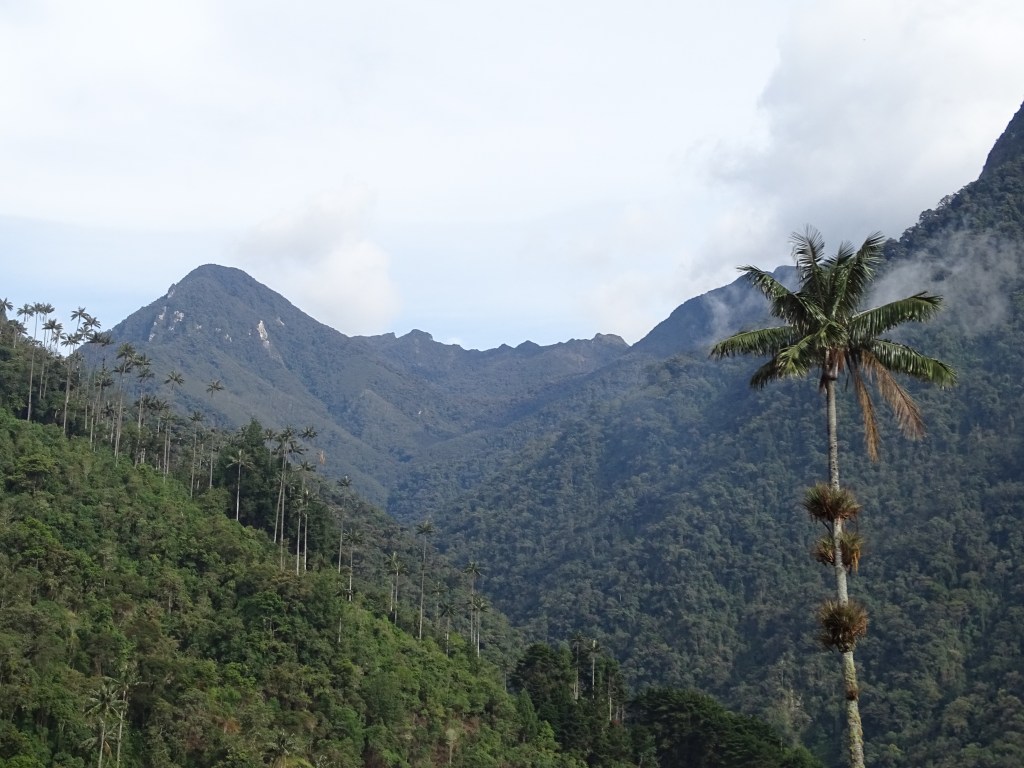
Utterly spent, I eventually reach the carpark for the willy jeeps back to Salento. Curiously, while the jeep to the valley was filled with foreign tourists, the jeep back is filled with Colombians. Even with the language barrier, I can tell that there’s a football match between Colombia and Chile going on. This is South America, after all.
Day 12
First, breakfast in a tourist café in Salento. It has messages written on the walls from visitors over the years, including not an inconsiderable amount of Hebrew and Stars of David, reminding me that South America is a popular destination for young Israelis after finishing their military service. It’s probably what those young women in the willy jeep were. This place is not exactly the best place for a traditional Colombian breakfast, but it does thick waffles laden with syrup and berries, and I’m going to need to keep my stamina up for what comes next. It’s going to be a taxi to the airport at the nearby city of Armenia, then a flight to Bogotá, then, after hanging around the airport for nine hours, a flight to Paris, then some more hanging around, then a flight to Manchester, stay the night, then three trains back home.
It’s going to be a some time before I’ll be able to sleep in my own bed, but when I do, by god, I will be glad for it.
 Wandering/Wondering