Day 1
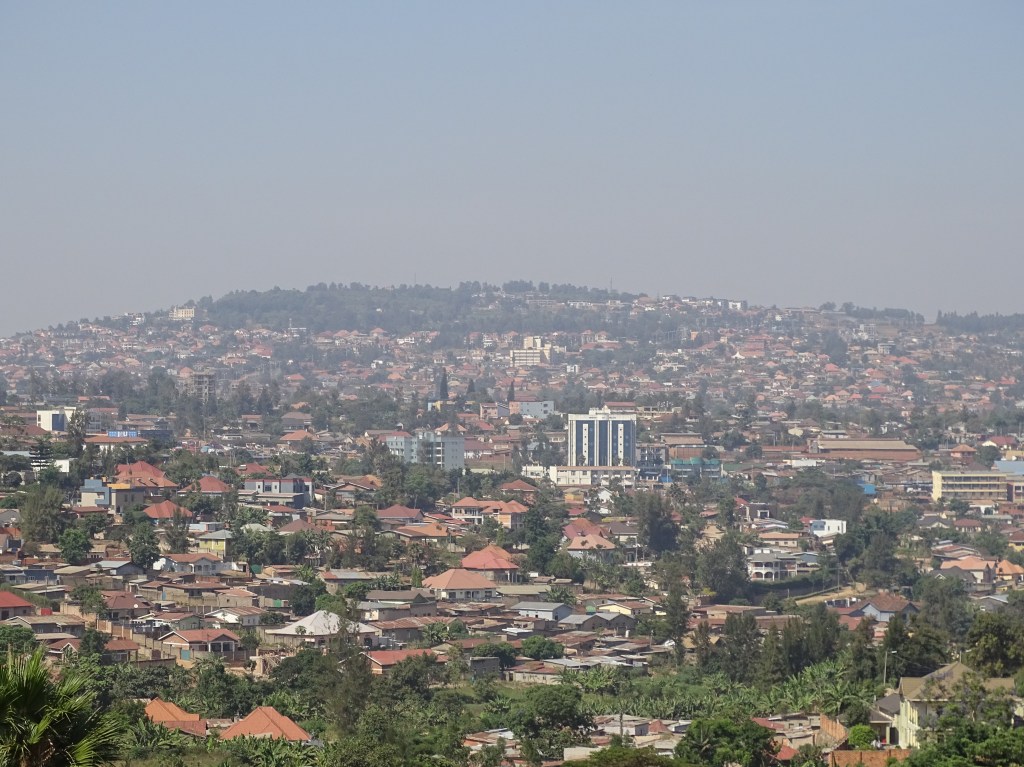
It’s not an auspicious start when I struggle to find my way out of the airport. Thankfully, a helpful man with an assault rifle has pointed me in the right direction, so now I’m walking into Kigali. It strikes me, through the fog of travel-exhaustion, as I look out across the terracotta roofs of this hilly city, that I may have gone a little bit hardcore. This is not a place that usually features on people’s itineraries, and it’s not going to be a place that is used to outsiders. Most only know Rwanda as the setting of a genocide in the mid-nineties, when extremists of the Hutu caste massacred moderate Hutus and members of the formerly-dominant minority Tutsi caste, and the destination of a controversial scheme to deport migrants. Which is why people were so baffled when I told them where I was going.
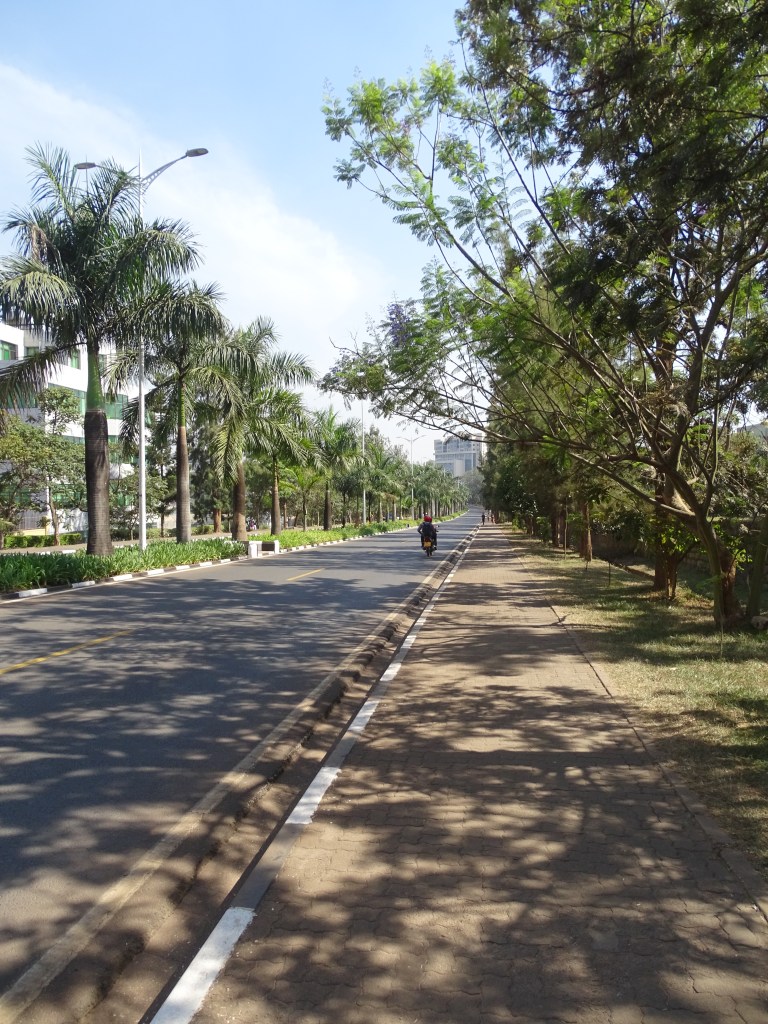
That all said, it seems benign enough. The streets are clean – the cleanest in Africa, I’ve heard – and everything seems orderly and calm. The hotel, which is small and partially open to the mild Rwandan elements, is friendly. It also has a restaurant, and the chips in Rwanda are said to be the best in East Africa.
Day 2

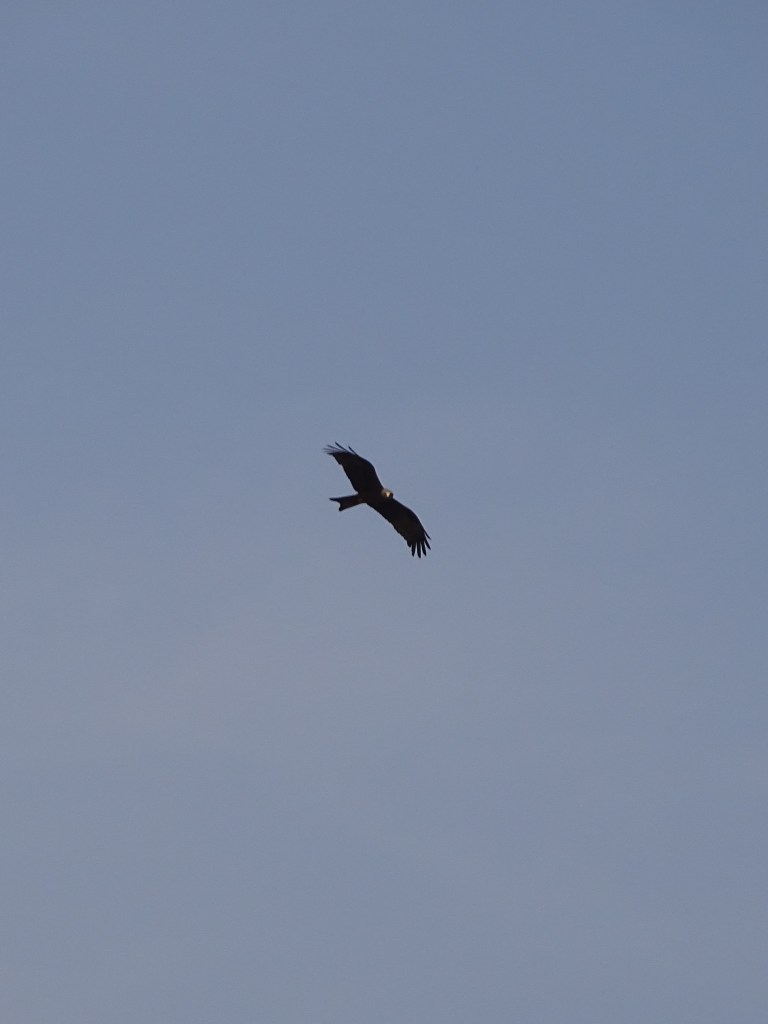
Kigali contains three things in abundance: black kites (birds of prey), red-helmeted motos (motorbike taxis), and large tropical flowers. Structurally different from European cities, it’s spread out and scattered across the hills with wide swathes of greenery in between. It makes the crowds uneven – some of the streets are so busy that at one point I fail to notice a car reversing into me, while others are almost deserted.
The constant slopes are tiring, but at least provide a lot of pretty views. I find one of the best in a ‘rooftop café’, on top of a dimly-lit bookshop. Lunch there is a cheese toastie with a chickpea salad, accompanied by the sound of a group of medical students discussing their work in a mix of English and Kinyarwanda behind me. I take such a group of budding young professionals as a hopeful sign, but across the city many of the larger, more affluent houses and the foreign embassies, have high walls, barbed wire, and occasionally even guards in front of steel gates. The whole reason that I had come to this country is its reputation as the safest in Africa, so I can only hope that the security measures are relics from a darker past.
There are more signs of a city on the up, though, like the building sites for a golf resort and a shopping centre. On the streets, none of the adults stare at this obvious foreigner in their midst, although a toddler flinches from me before waving and saying, ‘Bike!’ – Kinyarwanda for ‘Hi!’.
I wave back and say, ‘Muraaho’ – ‘Hello’. Once I’m nearer to the city centre, I become less of a rarity, and there are more foreigners. Although, interestingly, I notice that there are about as many East Asians as there are Europeans. Am I seeing hints of a tectonic shift in geopolitical power in this tiny country in the heart of Africa?
In any case, I have more pressing concerns. Like frantically trying to discover if I need a covid test before visiting Akagera National Park, and how to get one.
Day 3
After visiting what I think may have been the national medical institute and its bewildered staff, and the sterling efforts of my host, Florence, in pursuit of a covid test, I’m told by my driver that it’s not needed. It’s dawn, and the driver’s name is Hodari. He’s come to pick me up and take me on safari (a safari! In a vaguely affordable day trip! Me! On!), and he’s proving to be an informative guide, the pride in his country evident in his voice.
Cars are scarcer outside the capital, and we stop to refuel quite soon after leaving Kigali.
‘If this was Kenya, this is when we’d drive off!’ Hodari beams as the attendant finishes filling the tank.
There are still a few other cars, though, and the occasionally painfully slow lorry, belching out smoke from its exhaust as it inches across the tarmac, but most of all there are bikes. They’re piled high with produce, usually green bananas, and being pushed up Rwanda’s innumerable hills by sweating men. The whole country seems one big farm; the tree-crowned hills of green and gold have their slopes covered in crops. The bikes are the most advanced pieces of equipment I see – otherwise, farming is done with wood and metal, as it has presumably been done for centuries.
The buildings here are distinctive – pillared porches and roofs that slope down from the front, painted pale yellow near Kigali, then bright blue and turquoise as we go further east. Some of them have geometric black shapes painted onto the pillars.
We stop in a village of them so Hodari can fetch some food. Left alone in the car, I’m examining the official information booklet on Akagera National Park when I am abruptly reminded of how unused to foreigners they are in this part of world: a swarm of children surround the car and stare at me. One of them knocks on the window.
‘What is your name?’ he asks in English.
My name confuses everyone, sometimes even my own people. ‘Erm…it’s hard to say,’ I reply feebly.
I’m rescued from having to explain further by the arrival of Hodari. The children scatter and he grumbles about their lack of manners.
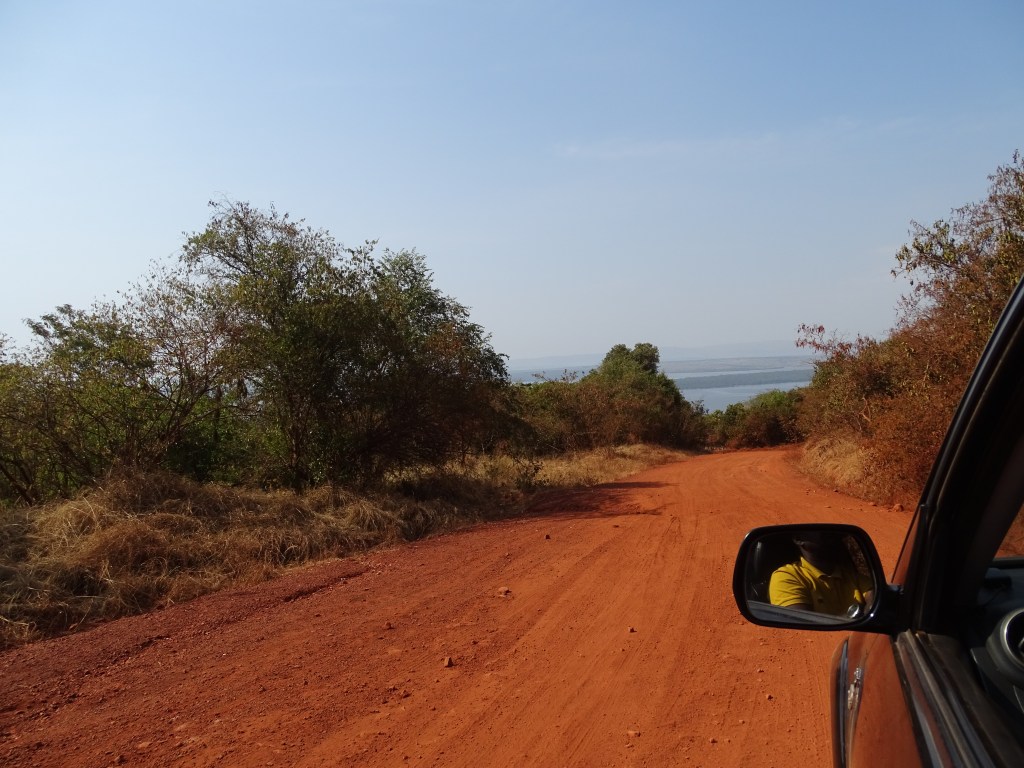
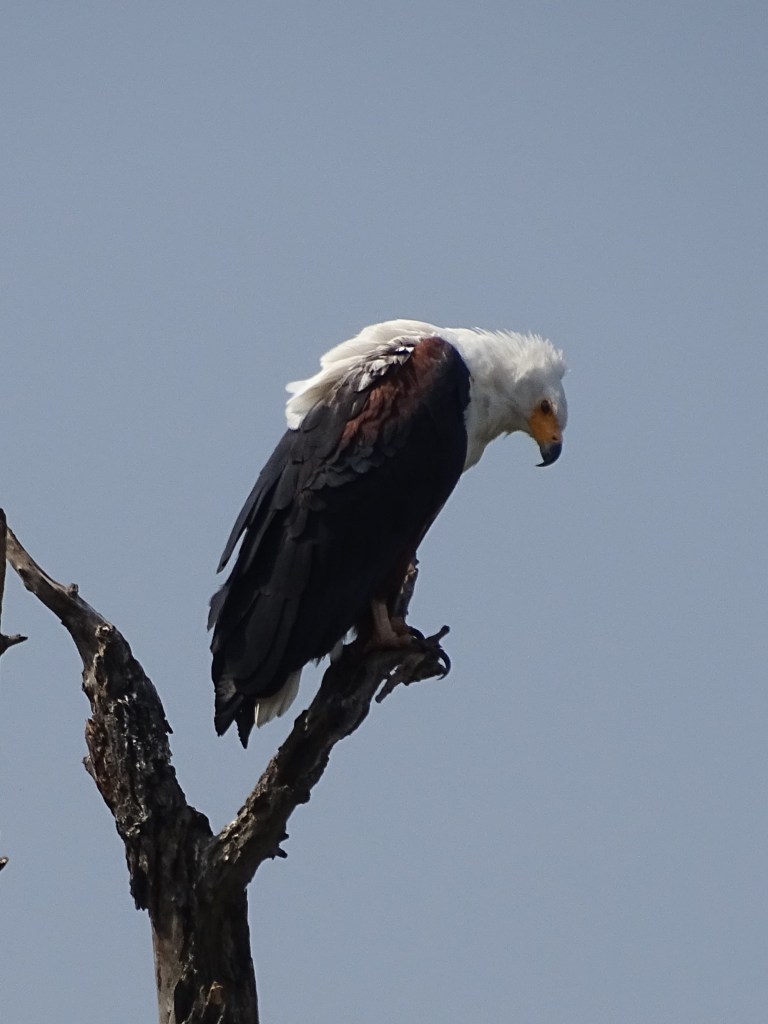
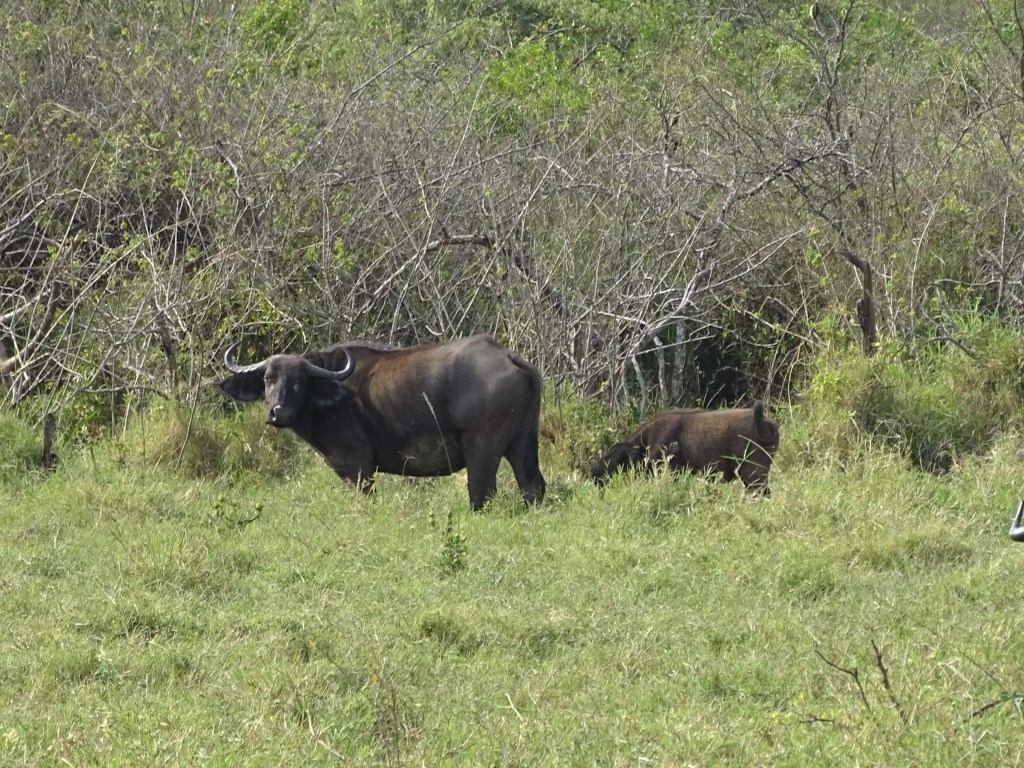
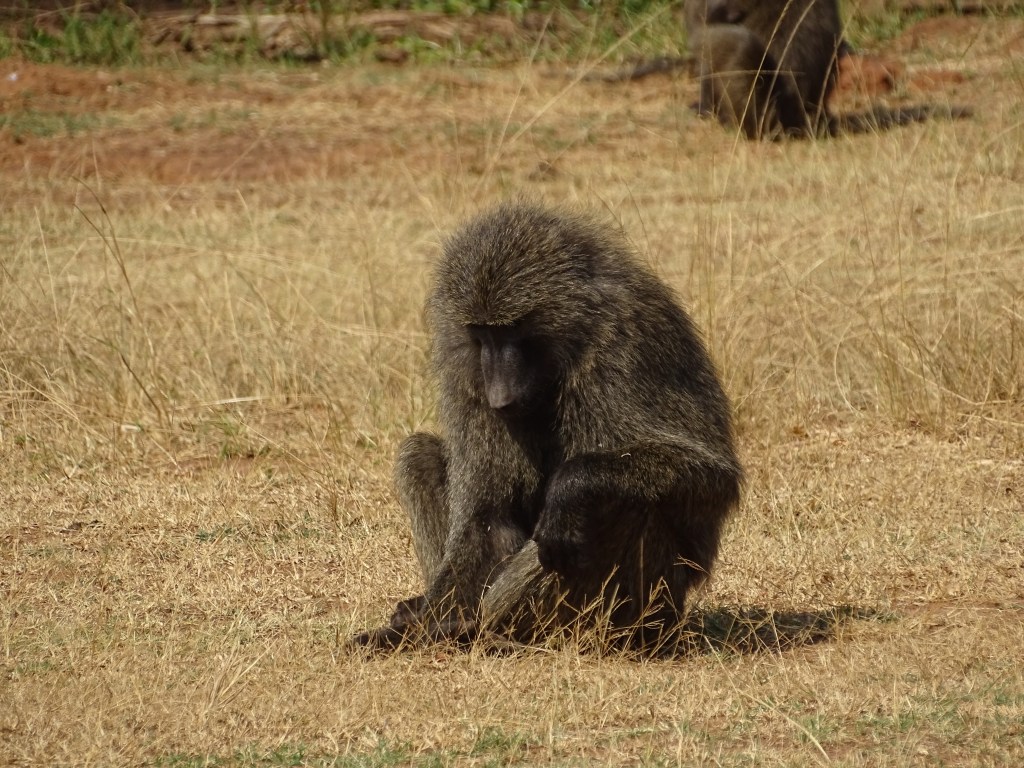
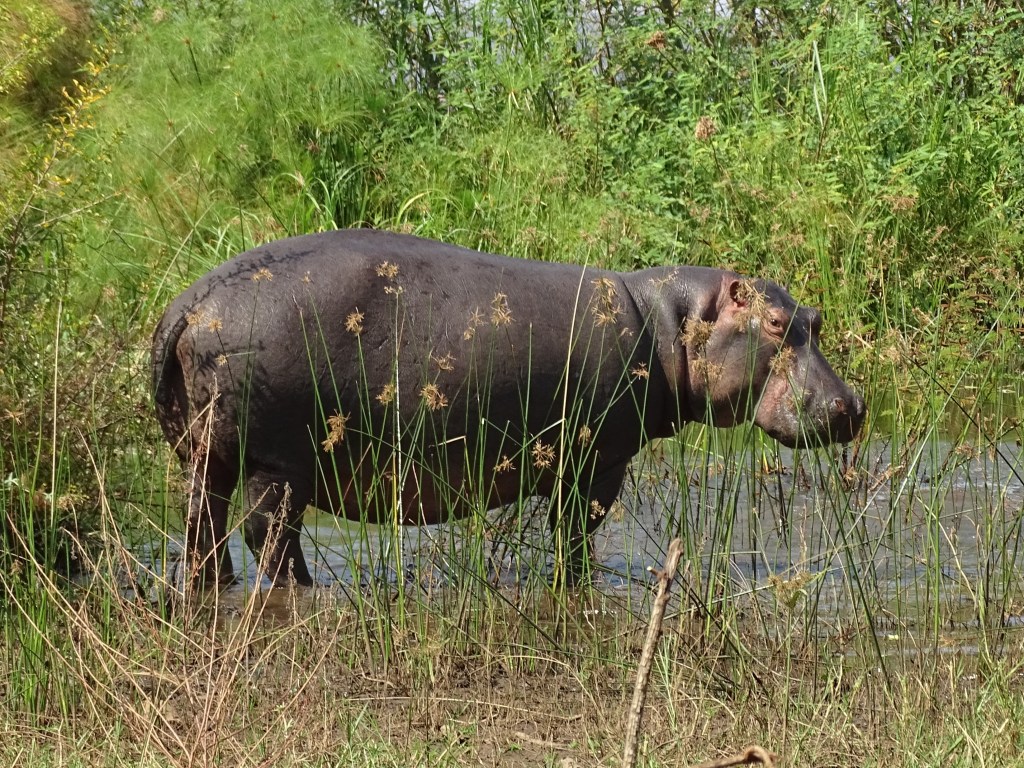
I’m on safari! I’ve just seen buffaloes and hippos and baboons! Akagera isn’t quite the image of the savannah I had imagined – rather than sweeping, grass-covered plains, it’s mainly thick, thorny bush – but it’s still full of those classic African animals that I watched on TV as a child.
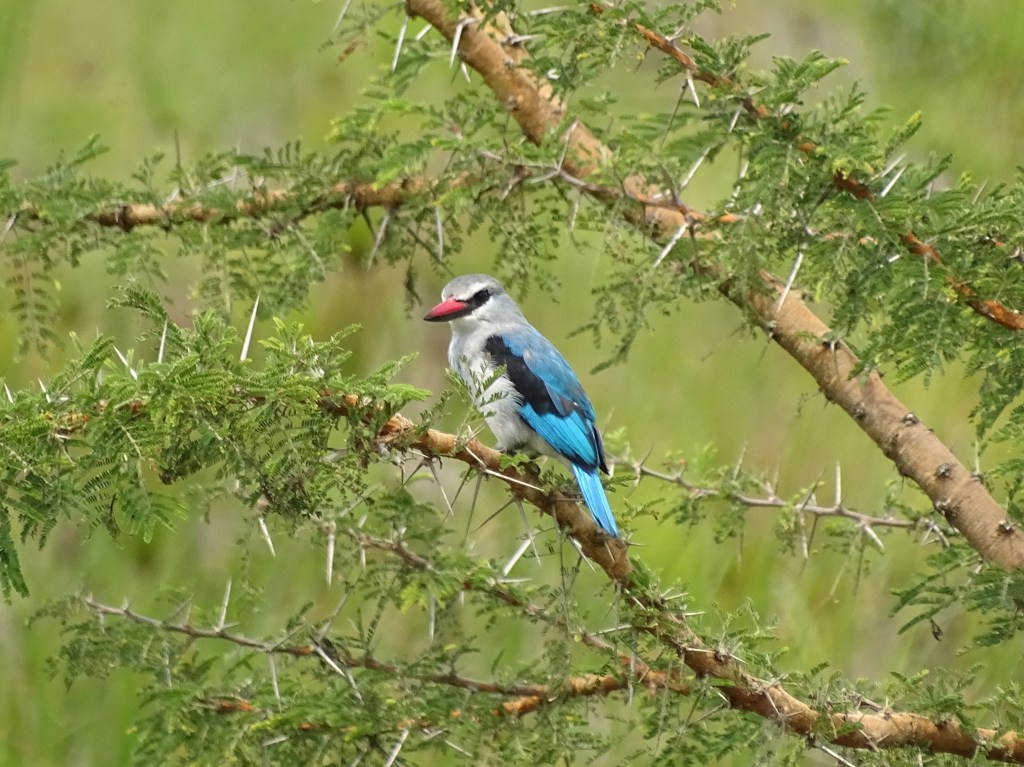
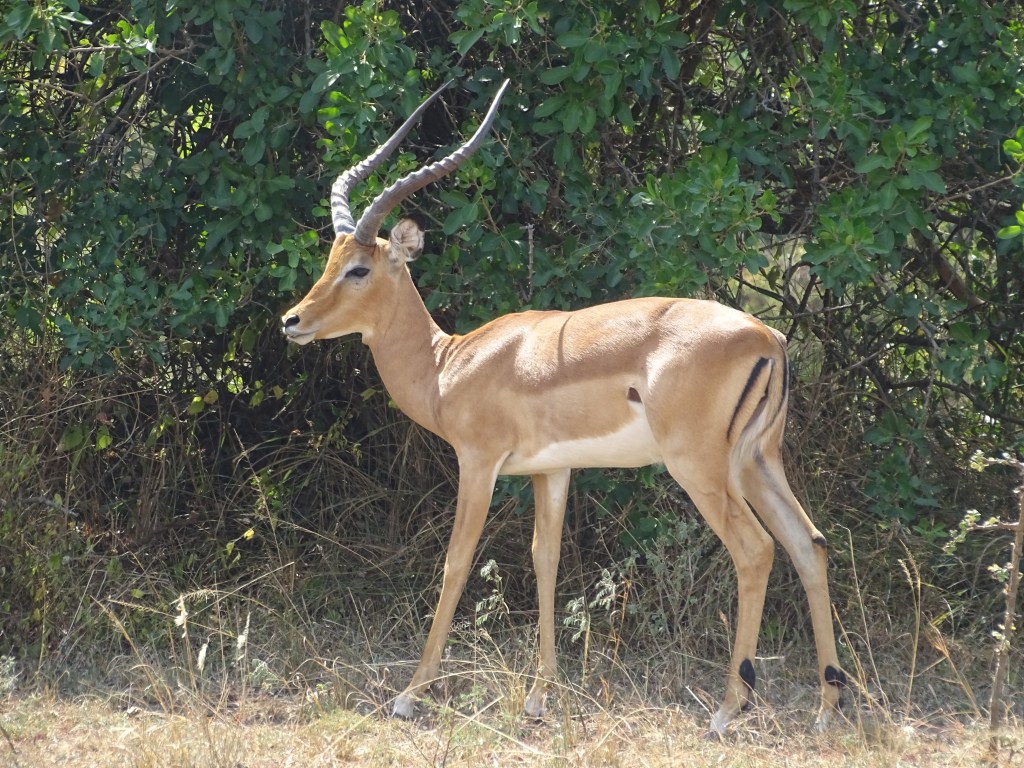
Another distinctively African animal here is the tsetse fly, but it’s something you’d be more likely of seeing in a medical journal than a wildlife documentary. They’re particularly infamous for giving people sleeping sickness. I share the insect repellent with Hodari, but one still manages to bite him on the leg. They’re reputedly difficult to kill, so I take a perverse pride in getting two of the bastards.
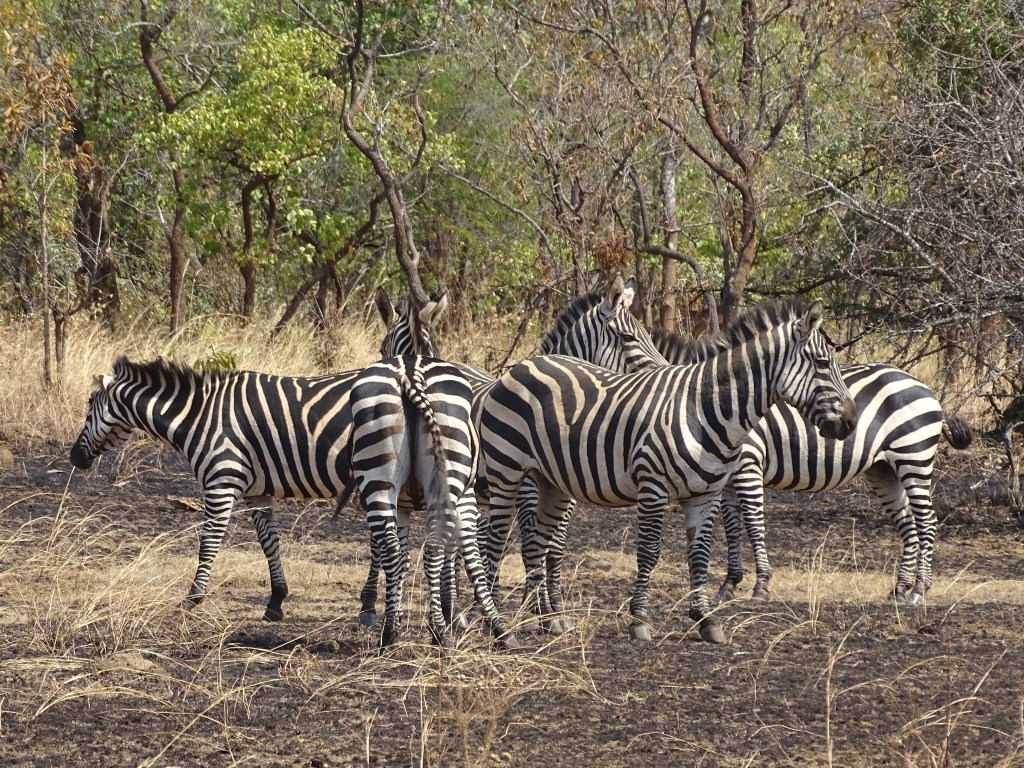
Suddenly, we’re driving amidst a swathe of destruction, where the bush has been reduced to smoking black ash. Smoke in the sky indicates more fire in the distance. Hodari assures me that fires here are natural and normal, but he looks worried. I can see a still-living flame, flickering in the hollow of a blackened tree.

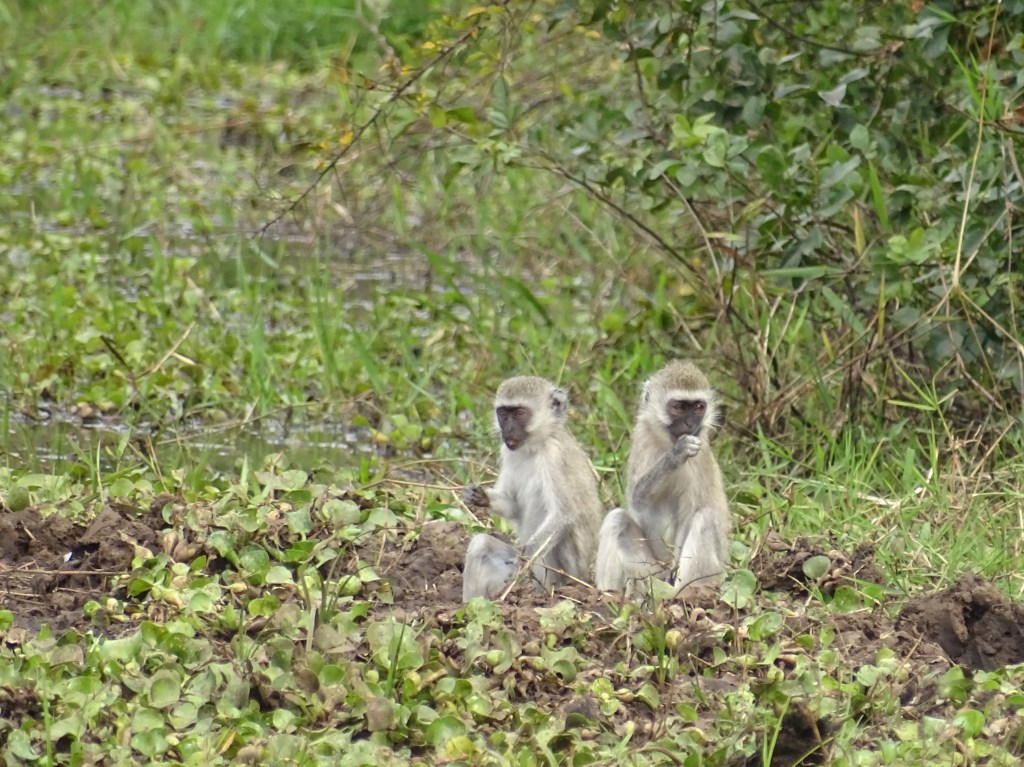
Beyond the burnt ruins, there’s a great lake. At the marshes on its edge, I can see birds and a few vervet monkeys climbing down from the trees, but no crocodiles. Nevertheless, Hodari tells me that they are there.
Further on, we finally find people. In the midst of the savannah, there’s a restaurant and picnic area on the lakeshore, where all the other tourists have congregated. I’m not eating here – I just brought a bunch of bananas for my lunch, and Hodari has a bag of eggs – but we stop to stretch our legs. Across the water, I can see the hazy outline of the hills in Tanzania.

On the way back to Kigali, Hodari starts speaking of Rwanda’s president, Paul Kagame. He reverentially declares that Kagame loves them all, is a highly intelligent man, and the things he says become true years later. I don’t disagree with him. For one, I know that critics of Kagame have been met with “accidents”, but also, I know that what Hodari said is at the very least, partially true. Under Kagame’s efficient rule, since his rebel army put an end to the genocide in 1994, Rwanda has seen enormous improvement at a rapid pace. The very road we are driving on, Hodari tells me, was only built three years ago. The country is still poor, but it is safer and less corrupt than countries in a similar situation.
All this being achieved under what is effectively a dictatorship raises moral questions with no easy answers.
Day 4
I am, to be honest with myself, quite a nervous man. So, it strikes me, in the seething crowds of Nyabugogo bus station, how precisely have I ended up doing these things? Why am I in the depths of Africa, trying to find a bus in a place so incredibly crowded and chaotic that I am convinced that if I will stay here for much longer that I will knock someone over with my rucksack, be robbed, then be run over by a bus?
Also, this is a very dusty country – how are everyone’s clothes so clean?
It’s not actually a bus I’m catching, in any case. It’s a midibus, which is what minibuses are called in Rwanda. When I finally find get on the right one, I’m profoundly glad that I had the foresight to buy two tickets so I could put my rucksack on the seat next to me. The space in here is very much limited.
It was a long, cramped journey as we travelled into the more mountainous west, where the vegetation grows thicker and the houses are painted grey, matching the sky over the mountains. Every time the midibus stopped at a bus stop, young men would sprint to the windows in a frantic attempt to sell barbecued sweetcorn to the passengers.
After four hours, I finally got off in Gisenyi, on the shores of the vast Lake Kivu, which is where the fish I’m eating in the hotel’s garden came from.
Day 5
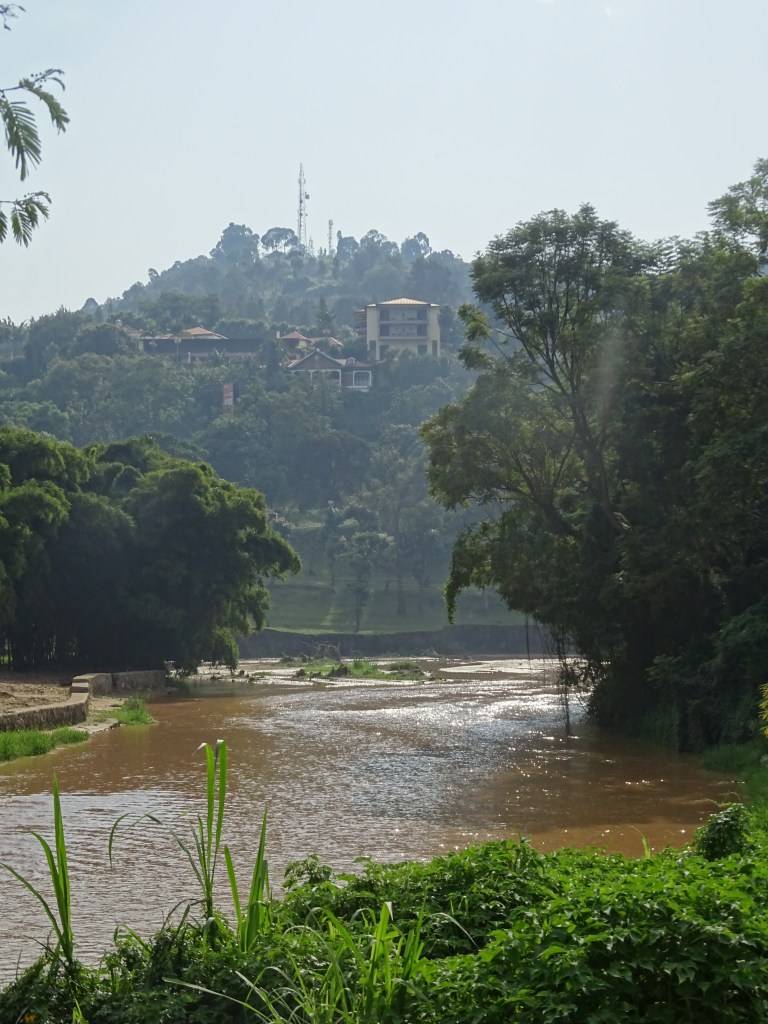
Gisenyi is something of a tourist destination within Rwanda, as the shores of Lake Kivu is the closest thing that they have to beaches in this landlocked country. Walking along the street between the lake and the widely-spaced houses with high garden walls results in being politely pestered by offers of boat rides.
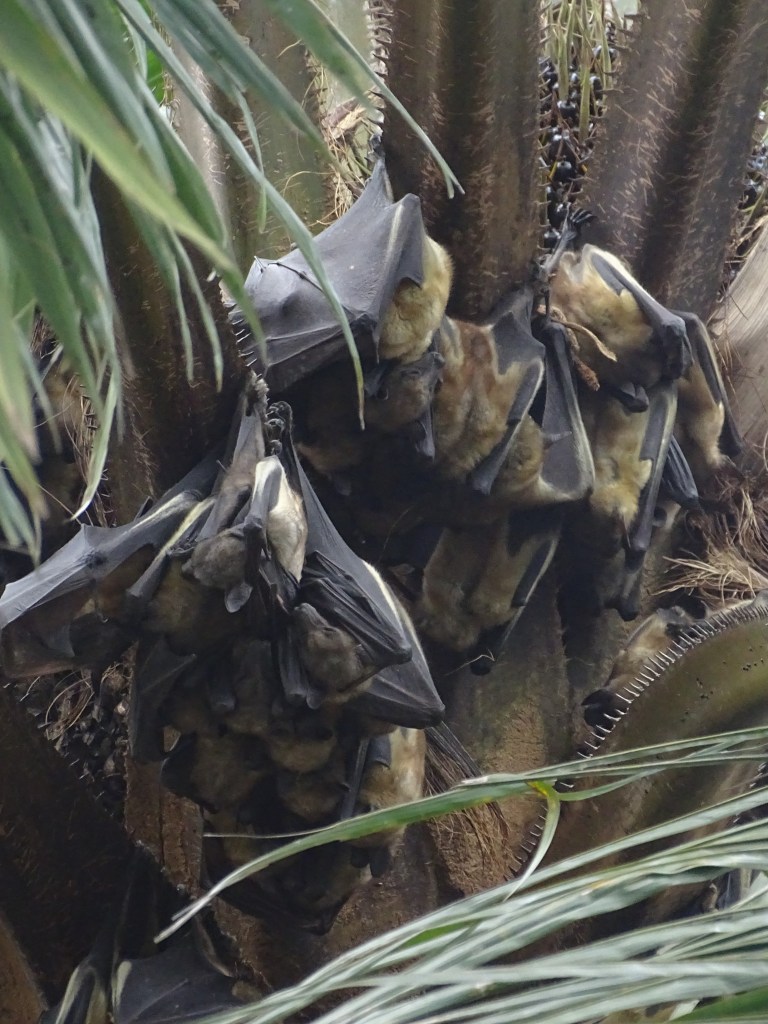
Despite the pestering, it’s all pleasant enough, except something puzzles me – every time I walk past a palm tree, I can hear squeaking, but I can’t see anything on their branches. Eventually, I realise that the squeaking is coming from the middle of the treetops: roosting colonies of yellow-furred fruit bats.
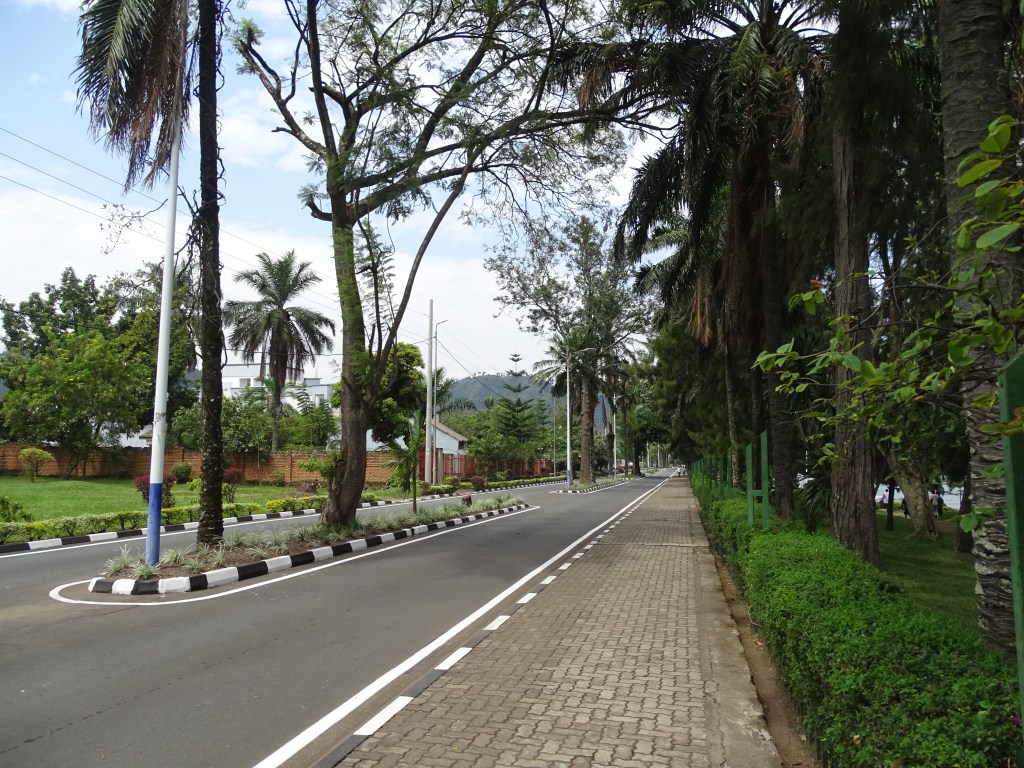
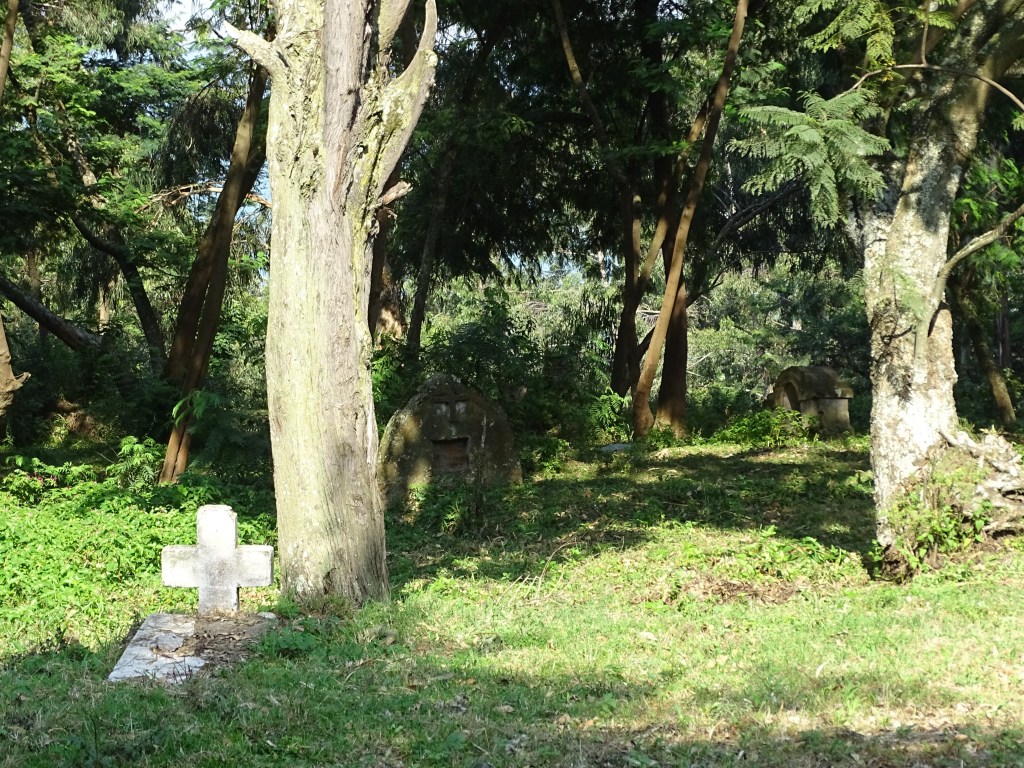
There is something I want to see in Gisenyi: I have read that the active volcano, Nyiragongo, is visible from the city, the summit smoking during the day and glowing orange in the night. I can’t see it from the street, but maybe I just need to get the right angle. I wander around the outskirts, trying to find a path up the hills and getting lost in what I think is a quarry. Eventually, I follow the road that rises steeply out of the city, past a few crumbling tombstones of Belgian soldiers who had fallen in the First World War, forgotten in the trees. Ultimately, it’s to no avail – the weather isn’t clear enough.
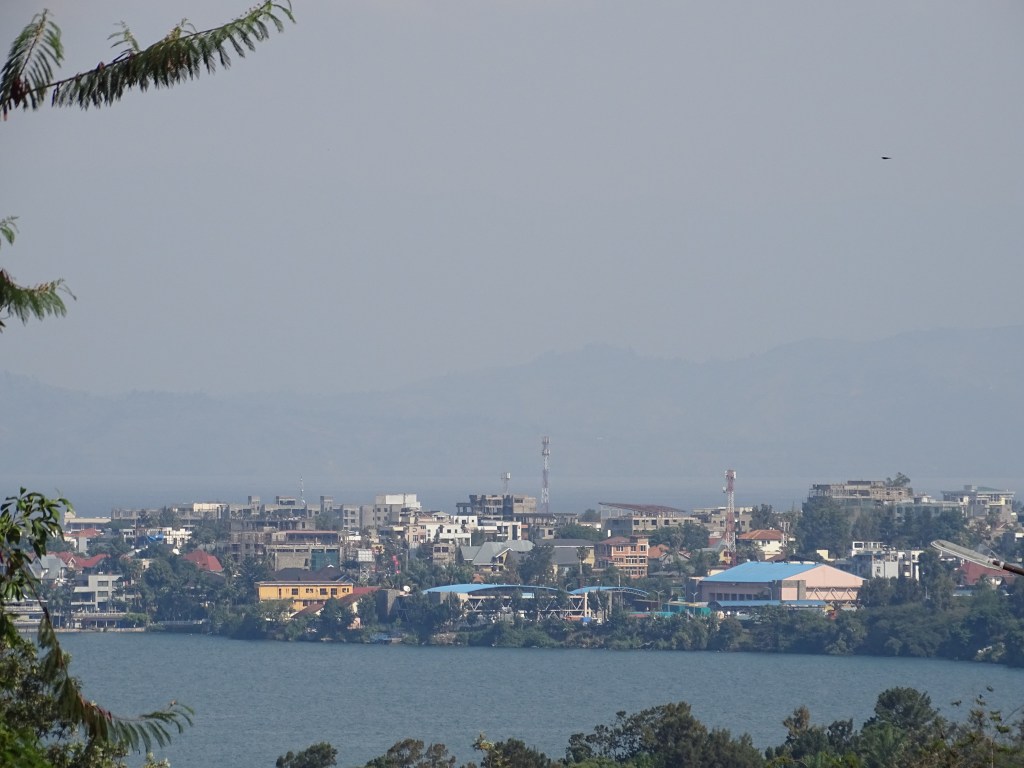
But I do get a clearer view of Goma, the city on the Democratic Republic of Congo’s side of the border, reminding me that in the space of a few days, I’ve been right across Rwanda.
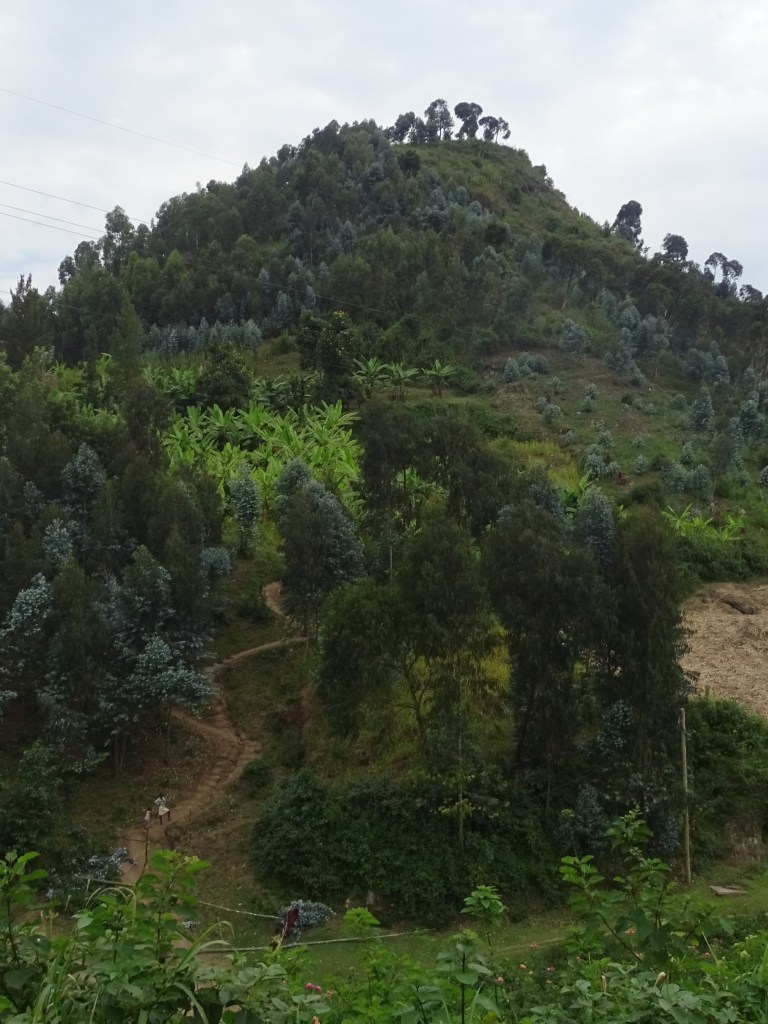
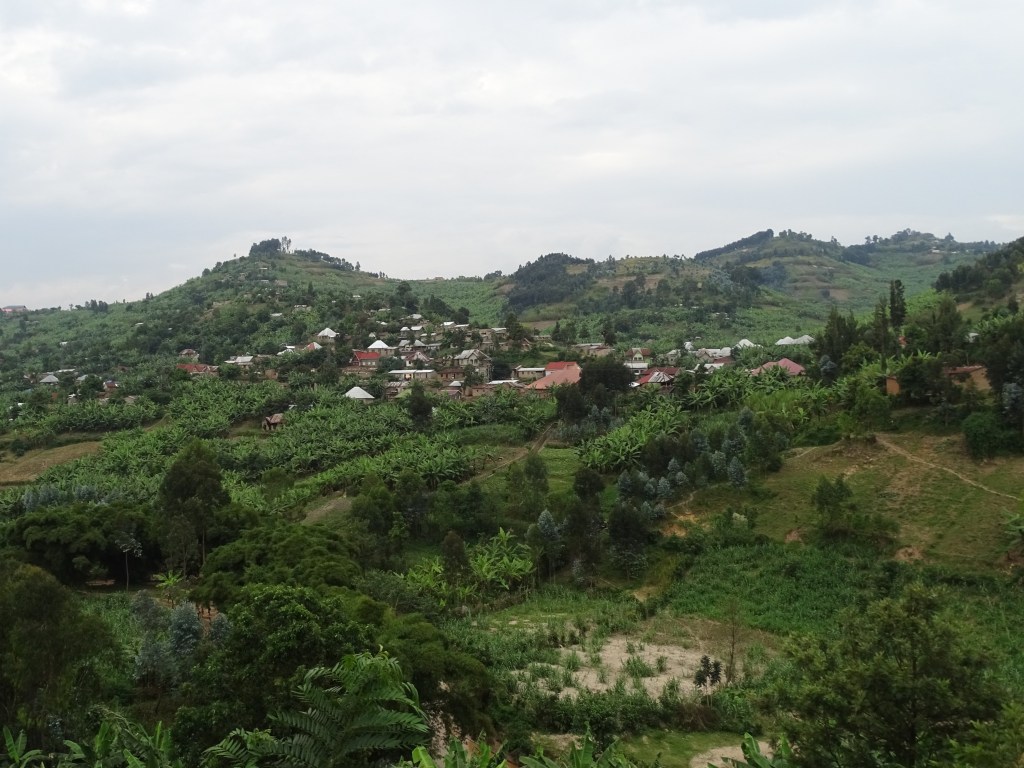
No volcano views, but it’s not too bad out here. The traffic on the road has quietened, leaving behind rural Central African idyll. I exchange greetings in Kinyarwanda with an old man, and step out of the way of a boy herding a flock of goats. I can see families walking up the hill, the women in their colourful dresses, presumably coming home from church. We’re not too far from a warzone, over the border in Congo, but here at least, there is peace.
Day 6
Still convinced that terrible things will happen if I go back to Nyabugogo bus station, I scrape together enough funds to hire a taxi that will take me the whole way to Kigali. The driver arrives with “Merci, Kagame” plastered across his windscreen. He is not the informative guide that Hodari was; he seems to speak French, but not English (Rwanda was a Belgian colony, but has adopted English as its European language as part of its re-alignment with the Anglophone East African countries), and is more interested in pointing out speed cameras when he does say something to me. But his windscreen and his phone’s background, which is a picture of Paul Kagame, make it clear that he shares the same sentiments towards their president.
I have one last thing to do before leaving Rwanda, which is to exchange my Rwandan francs for pounds. Having checked into the final hotel, I walk up a quiet street to a nearby bureau de change. It turns out not to be entirely deserted, as a woman with a child rushes up to me, her face contorted in distress.
‘Change, monsieur, change!’ she cries.
I’ve badly stretched my finances with this trip, but I can’t just walk on while carrying a wad of cash. I give some to the child. Rwanda is still far from free of poverty.
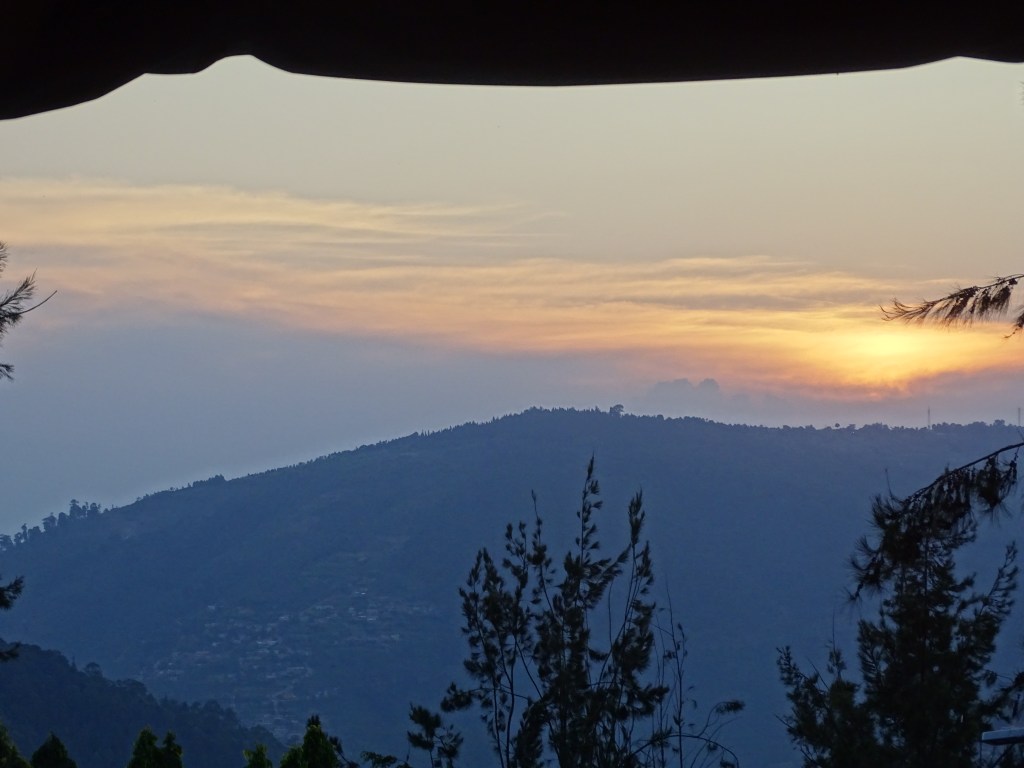
I spend much of my last evening in Rwanda sitting in the hotel’s open-sided terrace restaurant, reading, with the dark bulk of the hills on Kigali’s outskirts looming in my peripheral vision. Night is falling, and the call to prayer from a nearby mosque reverberates across the darkening sky, mingling with the squabbling crows and black kites above the dusty streets that are steadily filling up as people leave work. Maybe I’ll come back some day, when I’m old, and be able to tell people that I remember when the country was still one big farm without tractors, before all this new development that turned to Rwanda into a comfortable, middle-income country.
Maybe.
 Wandering/Wondering